

AI for Everyone: Learn the Future
1st Jul, Mon
12:00 AM - 07:28 PM
1458 registered
Project-Based Learning
AI Powered


Explore the Java course in Jaipur at GRRAS, a Java training institute offering a structured path from Core Java and object-oriented programming to JDBC, Hibernate, Spring Boot, REST APIs, MySQL and React integration. Build Java full stack development skills through coding exercises, testing, deployment and portfolio projects. Review the Java course FAQs and Jaipur training centre, then confirm classroom or live online Java classes, current batch timings and admission details during counselling.

150k+ Placements to Date

600+ Hiring Partners

₹76 Lakh Highest Annual Package




Build an Impressive Portfolio

Expand Your Career Opportunities

Stay Ahead with Industry Trends

Master Cutting-Edge Development Tools
Build skills relevant to Java developer, backend developer, software engineer and API integration roles. Practise application design, database connectivity, testing and deployment, and present original projects in your portfolio. Employment and salary depend on demonstrated skills, experience and employer requirements; course completion does not guarantee a job or salary.

₹05–09 LPA (Entry-Level), ₹10–18 LPA (Mid-Level), ₹19+25 LPA (Senior-Level)

Java Web Developers design and build web applications using JSP, Servlets, JDBC, and Spring Boot, ensuring scalability, reliability, and database-driven functionality.

₹04–08 LPA (Entry-Level), ₹09–16 LPA (Mid-Level), ₹17+22 LPA (Senior-Level)

Backend Java Engineers develop APIs, handle server-side logic, manage databases, and ensure secure integration for enterprise-grade applications using Java frameworks.

₹04–07 LPA (Entry-Level), ₹08–15 LPA (Mid-Level), ₹16+22 LPA (Senior-Level)

JSP/Servlet Developers specialize in building dynamic web applications, handling user requests, and developing server-side functionality for enterprise portals and platforms.

₹04–08 LPA (Entry-Level), ₹09–17 LPA (Mid-Level), ₹18+24 LPA (Senior-Level)

Software Engineers develop, test, and deploy Java-based applications, ensuring performance, scalability, and integration with databases and frontend frameworks.

₹03–06 LPA (Entry-Level), ₹07–14+ LPA (Mid-Level), ₹15+20 LPA (Senior-Level)

Application Support Engineers monitor, maintain, and troubleshoot Java web applications, ensuring seamless performance, bug fixing, and continuous improvements for enterprise systems.

₹05–10 LPA (Entry-Level), ₹11–19+ LPA (Mid-Level), ₹20+ 26LPA (Senior-Level)

API Integration Specialists design, implement, and manage APIs, ensuring smooth communication between Java applications, databases, and third-party systems.
Build skills relevant to Java developer, backend developer, software engineer and API integration roles. Practise application design, database connectivity, testing and deployment, and present original projects in your portfolio. Employment and salary depend on demonstrated skills, experience and employer requirements; course completion does not guarantee a job or salary.
₹05–09 LPA (Entry-Level), ₹10–18 LPA (Mid-Level), ₹19+25 LPA (Senior-Level)
Java Web Developers design and build web applications using JSP, Servlets, JDBC, and Spring Boot, ensuring scalability, reliability, and database-driven functionality.
₹04–08 LPA (Entry-Level), ₹09–16 LPA (Mid-Level), ₹17+22 LPA (Senior-Level)
Backend Java Engineers develop APIs, handle server-side logic, manage databases, and ensure secure integration for enterprise-grade applications using Java frameworks.
₹04–07 LPA (Entry-Level), ₹08–15 LPA (Mid-Level), ₹16+22 LPA (Senior-Level)
JSP/Servlet Developers specialize in building dynamic web applications, handling user requests, and developing server-side functionality for enterprise portals and platforms.
₹04–08 LPA (Entry-Level), ₹09–17 LPA (Mid-Level), ₹18+24 LPA (Senior-Level)
Software Engineers develop, test, and deploy Java-based applications, ensuring performance, scalability, and integration with databases and frontend frameworks.
₹03–06 LPA (Entry-Level), ₹07–14+ LPA (Mid-Level), ₹15+20 LPA (Senior-Level)
Application Support Engineers monitor, maintain, and troubleshoot Java web applications, ensuring seamless performance, bug fixing, and continuous improvements for enterprise systems.
₹05–10 LPA (Entry-Level), ₹11–19+ LPA (Mid-Level), ₹20+ 26LPA (Senior-Level)
API Integration Specialists design, implement, and manage APIs, ensuring smooth communication between Java applications, databases, and third-party systems.
 AWS Cloud
 Bootstrap
 Core Java
 Training
Core Java
Core Java Training
 CSS3
DSA
CSS3
DSA
 Firebase
 Git
Git
 Hibernate
 HTML5
HTML5
 Java
Java Backend Development
Java Collections
Java Course
Java Full Stack
Java Interview Preparation
Java Training
Java Training Institute
Java
Java Backend Development
Java Collections
Java Course
Java Full Stack
Java Interview Preparation
Java Training
Java Training Institute
 JDBC
JDBC
 Kafka
Kafka
 MongoDB
 MySQL
MySQL
 Next.js
Object-Oriented Programming
Next.js
Object-Oriented Programming
 React
React
 Redis
Redis
 REST APIs
 Spring
 Spring Boot
 Training
Spring Boot
Spring Boot Training
 Sql
Sql
 Tailwind
This practical Java course in Jaipur covers Core Java, object-oriented programming, JDBC, MySQL, Hibernate, Spring Boot, REST APIs, frontend integration, testing, and deployment fundamentals. Learners progress through guided coding exercises, assignments, and portfolio-ready projects.
Basic computer skills and logical problem-solving ability are recommended. Previous programming experience is helpful but not compulsory because the curriculum begins with Java fundamentals before progressing to advanced backend and full stack topics.
Structured learning path covering Java fundamentals, Object-Oriented Programming, advanced concepts, database connectivity, and practical project development. Each module includes hands-on exercises, real-world examples, and progressive skill building for comprehensive Java mastery.
Goal: Build strong programming foundation
Goal: Master Java design principles
Goal: Write efficient and modern Java applications
Goal: Data persistence and SQL mastery
Goal: Problem-solving & interview preparation
Goal: Build responsive user interfaces
Goal: Build scalable backend systems
Goal: Production-ready applications
Apply your Java skills through practical applications that connect backend development, databases, APIs, frontend interfaces, testing, and deployment. Selected projects include an online blogging application, an expense tracker, and an e-commerce platform built with Spring Boot and MySQL.
Each project helps learners practise application design, CRUD operations, database integration, REST API development, authentication concepts, debugging, version control, and portfolio presentation.
Skills You'll Gain: Building dynamic pages with JSP User authentication and profile management Database-driven content management CRUD operations with JDBC Deploying applications on Tomcat Description: This project is all about making an online blogging app where people can sign up, log in, write posts, and manage their content. It uses…
The Expense Tracker is a standalone financial management application developed using Java Swing, designed to help users track, categorize, and analyze their expenses efficiently. This user-friendly application provides a simple yet powerful platform for recording transactions, managing categories, generating reports, and setting reminders for bill payments. With local data storage…
Skills You'll Gain: REST API development with Spring Boot Database schema design and integration Payment and order management Secure authentication and authorization Deploying Java web applications Description: This project is about making an E-commerce platform where people can look at products, put things in their cart, and place safe orders.…
Receive a globally valued certification that validates your skills, practical knowledge, and job-ready expertise. This certification enhances your credibility, strengthens your resume, and helps you stand out to employers in competitive industries worldwide.

Professionals Trained

Countries & Counting

Corporate Served






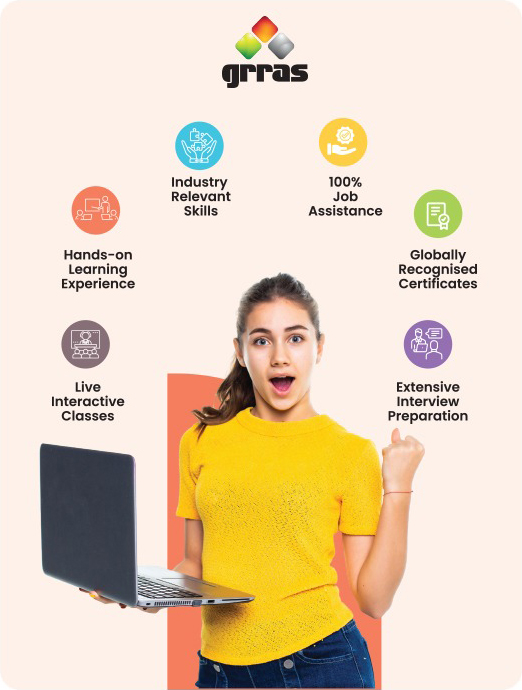
Build industry-ready skills with practical learning, expert guidance, real-world projects, and career-focused support. Our programs are designed to help you stay ahead of industry trends and confidently prepare for your professional journey.
Master a curriculum crafted and constantly updated by industry experts to match real-world trends, ensuring every concept and project builds job-ready, future-proof skills.
Receive one-on-one mentorship, resume reviews, mock interviews, and complete placement assistance through our 500+ hiring partners to accelerate your tech career.
Learn directly from certified professionals with years of hands-on experience who guide you through every module, project, and career milestone personally.
Gain practical exposure by working on live, industry-grade projects that mirror real business challenges, strengthening your technical execution and problem-solving abilities.
Join thousands of successful learners who have launched rewarding tech careers through Grras. Our consistent placement results, trusted partnerships, and alumni success stories speak for the quality of our training.
Navigate your professional journey with a comprehensive guide that transforms learning into opportunity. Discover proven strategies to build skills, gain experience, and secure your ideal position in today’s competitive job market.
 Building Strong Foundation
Focus on industry-relevant skills

Real-world projects to implement learned concepts.

Weekly tests to assess progress

 Sharpening Interview Readiness
Mock sessions with real-time feedback from experts

Host industry experts for advanced technical guidance

Focus on problem-solving, critical thinking, and domain expertise

 Communication & Aptitude Skill Development
Through interactive classes, students enhance both verbal and non-verbal communication, while also learning to present their ideas clearly, confidently, and effectively.

Enhances students' problem-solving, analytical thinking, and numerical ability-preparing them for competitive exams and placement tests.
 Resume building masterclasses
Help students structure professional, impactful resumes

 Bridging the Gap
* Partner with top companies for hiring pipelines * Conduct webinars and sessions with recruiters
* Connect candidates to aligned opportunities * Organize hiring events and recruitment drives
 Advance interview boot camp
Equip students to handle high-pressure interview situations
Prepare students for various interview formats, including case studies, coding rounds, and group discussions
 Personalized 1:1 guidance
* Address specific weaknesses and barriers to success. * Develop personalized improvement plans

Focus on industry-relevant skills
Real-world projects to implement learned concepts.
Weekly tests to assess progress
Mock sessions with real-time feedback from experts
Host industry experts for advanced technical guidance
Focus on problem-solving, critical thinking, and domain expertise
Through interactive classes, students enhance both verbal and non-verbal communication, while also learning to present their ideas clearly, confidently, and effectively.
Enhances students' problem-solving, analytical thinking, and numerical ability-preparing them for competitive exams and placement tests.
Help students structure professional, impactful resumes
* Partner with top companies for hiring pipelines * Conduct webinars and sessions with recruiters
* Connect candidates to aligned opportunities * Organize hiring events and recruitment drives
Equip students to handle high-pressure interview situations
Prepare students for various interview formats, including case studies, coding rounds, and group discussions
* Address specific weaknesses and barriers to success. * Develop personalized improvement plans

Our extensive network of hiring partners spans various industries, offering diverse opportunities to kickstart your career.





















Explore our top courses designed to build in-demand tech skills. Learn from expert trainers with practical training and industry-relevant curriculum.
Yes, expert mentors help students with projects, give them coding advice, fix problems, and get them ready for full stack Java jobs.
Yes, learners join coding workshops, webinars, and communities to work with Java developers and meet new people in their field.
Yes, students get lifetime access to alumni networks, resources, and faculty support that will help them succeed in full stack Java careers for a long time.
Yes, this program gives people who want to change careers strong skills in frontend, backend, and deployment, which makes it easy for them to get Java jobs.
Because they have expert trainers, project-based learning, recognized certifications, help with finding a job, and a history of helping students succeed in Java careers.
Yes, students get a certification that is recognized by the industry that proves their skills in full stack Java development. This opens up job opportunities in software engineering and IT.
Yes, employers see certification as proof that you know how to work with Java on the frontend, backend, databases, and deployment. This will make it more likely that you will get the best jobs.
In businesses, you can work as a Full Stack Java Developer, Backend Developer, Software Engineer, Web Application Developer, or API Integration Specialist.
Yes, placement help includes getting ready for interviews, making a resume, optimizing your LinkedIn profile, and getting access to job portals for full stack development jobs.
Yes, Java is still the backbone of business systems, which is why full stack Java development is one of the most sought-after software skills in the world.
Some of the projects are making web apps, making REST APIs, connecting MySQL databases, testing apps, and putting solutions into the cloud.
Yes, all of the projects are ready for your portfolio. They show off your skills in Java development, frontend, backend, and DevOps integration to potential employers.
Yes, projects involve making REST APIs with Spring Boot, linking them to MySQL databases, and connecting them to React or Angular frontends.
Yes, you will deploy Java full stack apps to AWS or Azure and practice CI/CD workflows for delivery pipelines that are good enough for businesses.
Yes, students make apps that are tested with JUnit and Mockito, which gives them the quality assurance and debugging skills they need to work as professional Java developers.
Yes, you can choose either way to learn. Learners can choose between live online interactive classes and offline classroom-based sessions, depending on what they want.
Yes, professionals can learn Java full stack development on a flexible schedule while still working. This helps keep career growth steady in the field of modern enterprise software development.
Yes, all of the sessions are recorded. Students can go back and review things they missed, watch recordings whenever they want, and work on coding assignments and projects to get a better understanding.
Yes, students can access project files, notes, and recordings for life, which means they can improve their full stack Java skills at any time in their careers.
Yes, certified trainers will help you with your career, explain Java frameworks, help you build projects, answer your questions, and guide you through the full stack program.
You will learn how to use DevOps tools for making enterprise applications, as well as Java, Spring Boot, Hibernate, REST APIs, React, Angular, MySQL, GitHub, and JUnit.
Yes, the training includes front-end work with React and Angular, back-end work with Java and Spring Boot, database work with MySQL, and deployment for full-stack apps.
Yes, students work on projects like blogging apps, e-commerce platforms, employee management systems, and REST APIs that are in line with what businesses really need.
Yes, students use Spring Boot to design and build REST APIs, connect them to frontend frameworks, and keep connections with databases safe.
Yes, the course covers JUnit, Mockito, GitHub version control, CI/CD pipelines, and deploying to AWS in the cloud for full-stack projects that are ready for business.
This course teaches full stack Java development, which includes the front end, back end, REST APIs, databases, and deployment. Students consistently build enterprise applications in a variety of settings.
Anyone who wants to learn how to use Java for frontend, backend, and deployment should join. This includes students, developers, administrators, DevOps engineers, and IT professionals.
No, you don’t need to know Java before. It helps to know a little about programming or web development, but all the full stack concepts are explained one at a time.
People who learn can work as Full Stack Developers, Backend Java Developers, Software Engineers, Web Application Developers, or API Integration Specialists in any field.
Yes, students and graduates can get Java certification, work on projects, and get ready for jobs in full stack development, software engineering, and web application development.
GRRAS Jaipur is at 219, Himmat Nagar, Gopalpura Mod, Tonk Road, Jaipur, Rajasthan 302018. Confirm the classroom venue and batch timetable before visiting. View the centre on Google Maps.
Contact GRRAS for current Java course fees during counselling. Request details of instalments, applicable taxes, software or cloud costs, and any external certification examination fees before enrolling.
The published Java course overview lists a duration of 6–8 months. Confirm the duration, weekly timetable, learning hours and assignment requirements for your selected batch during counselling.
The learning path begins with Java fundamentals before object-oriented programming, databases and full stack topics. Basic computer skills and logical problem-solving are recommended. Discuss your background with the advisor to confirm preparation needed for your batch.
The course overview lists classroom and live online options. Confirm the currently available mode, timetable, instructor interaction and assignment feedback process for your selected batch.
Ask GRRAS for the current weekday and weekend timetable. Choose a batch that allows regular coding practice and project completion; availability and start dates should be confirmed during counselling.
No. A GRRAS course-completion certificate and an external Oracle certification examination are separate credentials. Confirm programme assessment requirements and any external exam preparation or fees before enrolling.
No. Career or placement assistance supports preparation and the job search, but final hiring decisions belong to employers. Ask GRRAS for current Java programme support services, eligibility and terms; assistance is not a guaranteed job or salary.
Compare the actual syllabus, trainer experience, coding practice, project feedback, batch hours, fees and career-support terms. Ask GRRAS for a demo and the current programme details. Choose an institute whose learning path suits your starting skills and goals rather than relying only on a best or number-one claim.
Yes. The published curriculum progresses from Java fundamentals and object-oriented programming to collections, JDBC, databases, DSA, Spring Boot, microservices, frontend integration and deployment. Confirm the current topic depth and assessments during counselling, especially if you want only Core Java or backend training rather than the complete full stack programme.
Yes, expert mentors help students with projects, give them coding advice, fix problems, and get them ready for full stack Java jobs.
Yes, learners join coding workshops, webinars, and communities to work with Java developers and meet new people in their field.
Yes, students get lifetime access to alumni networks, resources, and faculty support that will help them succeed in full stack Java careers for a long time.
Yes, this program gives people who want to change careers strong skills in frontend, backend, and deployment, which makes it easy for them to get Java jobs.
Because they have expert trainers, project-based learning, recognized certifications, help with finding a job, and a history of helping students succeed in Java careers.
Yes, students get a certification that is recognized by the industry that proves their skills in full stack Java development. This opens up job opportunities in software engineering and IT.
Yes, employers see certification as proof that you know how to work with Java on the frontend, backend, databases, and deployment. This will make it more likely that you will get the best jobs.
In businesses, you can work as a Full Stack Java Developer, Backend Developer, Software Engineer, Web Application Developer, or API Integration Specialist.
Yes, placement help includes getting ready for interviews, making a resume, optimizing your LinkedIn profile, and getting access to job portals for full stack development jobs.
Yes, Java is still the backbone of business systems, which is why full stack Java development is one of the most sought-after software skills in the world.
Some of the projects are making web apps, making REST APIs, connecting MySQL databases, testing apps, and putting solutions into the cloud.
Yes, all of the projects are ready for your portfolio. They show off your skills in Java development, frontend, backend, and DevOps integration to potential employers.
Yes, projects involve making REST APIs with Spring Boot, linking them to MySQL databases, and connecting them to React or Angular frontends.
Yes, you will deploy Java full stack apps to AWS or Azure and practice CI/CD workflows for delivery pipelines that are good enough for businesses.
Yes, students make apps that are tested with JUnit and Mockito, which gives them the quality assurance and debugging skills they need to work as professional Java developers.
Yes, you can choose either way to learn. Learners can choose between live online interactive classes and offline classroom-based sessions, depending on what they want.
Yes, professionals can learn Java full stack development on a flexible schedule while still working. This helps keep career growth steady in the field of modern enterprise software development.
Yes, all of the sessions are recorded. Students can go back and review things they missed, watch recordings whenever they want, and work on coding assignments and projects to get a better understanding.
Yes, students can access project files, notes, and recordings for life, which means they can improve their full stack Java skills at any time in their careers.
Yes, certified trainers will help you with your career, explain Java frameworks, help you build projects, answer your questions, and guide you through the full stack program.
You will learn how to use DevOps tools for making enterprise applications, as well as Java, Spring Boot, Hibernate, REST APIs, React, Angular, MySQL, GitHub, and JUnit.
Yes, the training includes front-end work with React and Angular, back-end work with Java and Spring Boot, database work with MySQL, and deployment for full-stack apps.
Yes, students work on projects like blogging apps, e-commerce platforms, employee management systems, and REST APIs that are in line with what businesses really need.
Yes, students use Spring Boot to design and build REST APIs, connect them to frontend frameworks, and keep connections with databases safe.
Yes, the course covers JUnit, Mockito, GitHub version control, CI/CD pipelines, and deploying to AWS in the cloud for full-stack projects that are ready for business.
This course teaches full stack Java development, which includes the front end, back end, REST APIs, databases, and deployment. Students consistently build enterprise applications in a variety of settings.
Anyone who wants to learn how to use Java for frontend, backend, and deployment should join. This includes students, developers, administrators, DevOps engineers, and IT professionals.
No, you don’t need to know Java before. It helps to know a little about programming or web development, but all the full stack concepts are explained one at a time.
People who learn can work as Full Stack Developers, Backend Java Developers, Software Engineers, Web Application Developers, or API Integration Specialists in any field.
Yes, students and graduates can get Java certification, work on projects, and get ready for jobs in full stack development, software engineering, and web application development.
GRRAS Jaipur is at 219, Himmat Nagar, Gopalpura Mod, Tonk Road, Jaipur, Rajasthan 302018. Confirm the classroom venue and batch timetable before visiting. View the centre on Google Maps.
Contact GRRAS for current Java course fees during counselling. Request details of instalments, applicable taxes, software or cloud costs, and any external certification examination fees before enrolling.
The published Java course overview lists a duration of 6–8 months. Confirm the duration, weekly timetable, learning hours and assignment requirements for your selected batch during counselling.
The learning path begins with Java fundamentals before object-oriented programming, databases and full stack topics. Basic computer skills and logical problem-solving are recommended. Discuss your background with the advisor to confirm preparation needed for your batch.
The course overview lists classroom and live online options. Confirm the currently available mode, timetable, instructor interaction and assignment feedback process for your selected batch.
Ask GRRAS for the current weekday and weekend timetable. Choose a batch that allows regular coding practice and project completion; availability and start dates should be confirmed during counselling.
No. A GRRAS course-completion certificate and an external Oracle certification examination are separate credentials. Confirm programme assessment requirements and any external exam preparation or fees before enrolling.
No. Career or placement assistance supports preparation and the job search, but final hiring decisions belong to employers. Ask GRRAS for current Java programme support services, eligibility and terms; assistance is not a guaranteed job or salary.
Compare the actual syllabus, trainer experience, coding practice, project feedback, batch hours, fees and career-support terms. Ask GRRAS for a demo and the current programme details. Choose an institute whose learning path suits your starting skills and goals rather than relying only on a best or number-one claim.
Yes. The published curriculum progresses from Java fundamentals and object-oriented programming to collections, JDBC, databases, DSA, Spring Boot, microservices, frontend integration and deployment. Confirm the current topic depth and assessments during counselling, especially if you want only Core Java or backend training rather than the complete full stack programme.
Visit GRRAS Solutions in Jaipur for Java Full Stack course counselling, batch details, demo sessions, and enrolment assistance.



Copyright © 2026 GRRAS Solutions Pvt. Ltd.












 Whatsapp us
 Call us
 Enquire Now