



AI for Everyone: Learn the Future
1st Jul, Mon
12:00 AM - 07:28 PM
1458 registered
ISO-certified
AI Powered


This full stack development course with Generative AI brings together responsive frontend development, backend APIs, databases and cloud deployment. Learn HTML, CSS, JavaScript, TypeScript, React, Node.js, Express.js, MongoDB and SQL, then explore Next.js and AI-powered application features. Practise through original projects, build a documented GitHub portfolio and prepare for developer interviews.

150k+ Placements till Date

600+ Hiring Partners

76 Lakhs Highest Annual Package




Build an Impressive Portfolio

Expand Your Career Opportunities

Stay Ahead with Industry Trends

Master Cutting-Edge Development Tools
Develop skills relevant to frontend React developer, backend Node.js developer, MERN stack developer and full stack JavaScript developer roles. This program combines web development practice, Generative AI integration, deployment and interview preparation. Use original projects to demonstrate your skills; hiring and compensation depend on experience, portfolio, interviews and employer requirements.
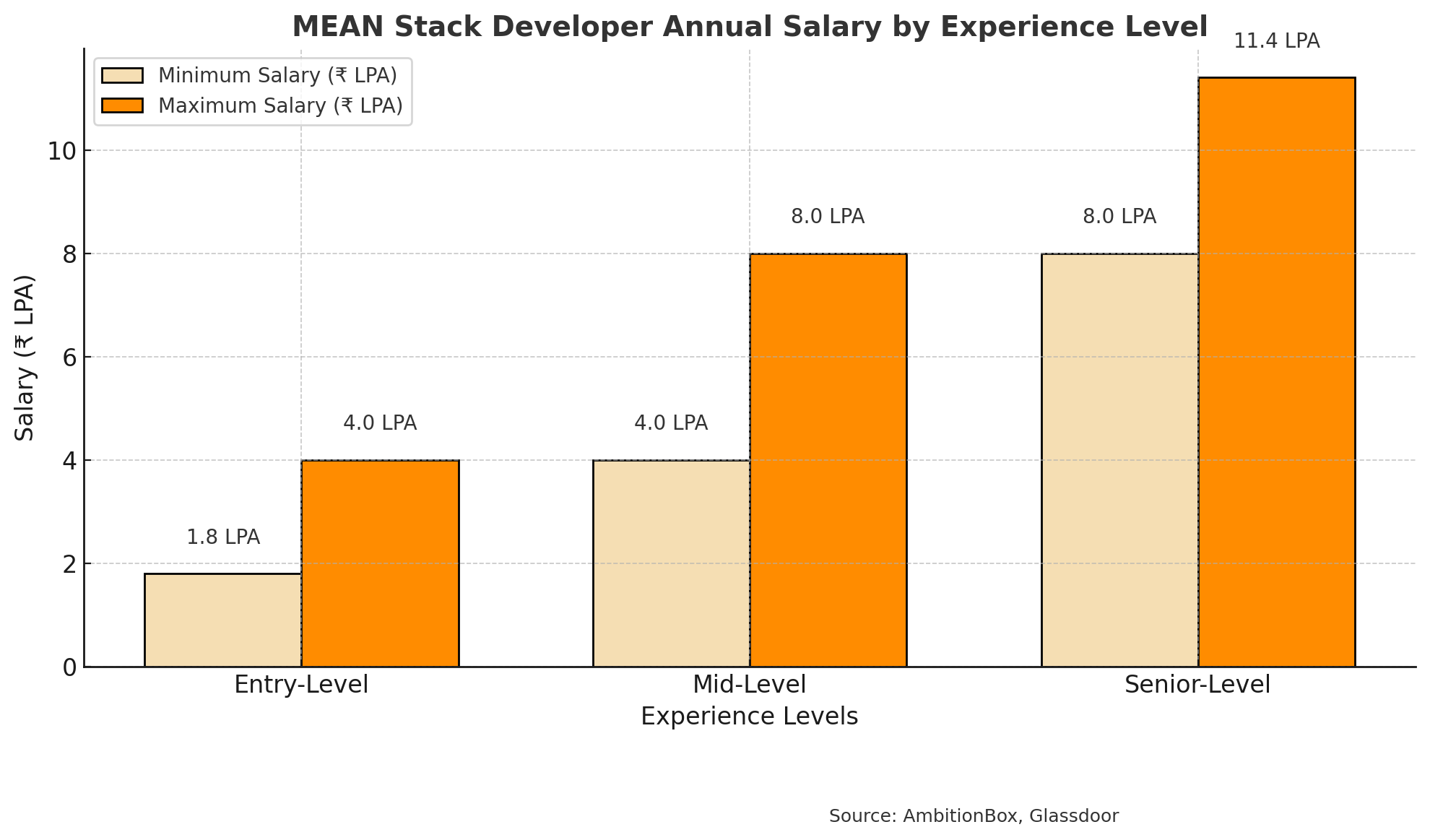
₹1.8–04 LPA (Entry-Level), ₹04–08 LPA (Mid-Level), ₹08+ 11.LPA (Senior-Level)
Develops full-stack web applications using MongoDB, Express.js, React and Node.js while maintaining performance, scalability, security and a responsive user experience.
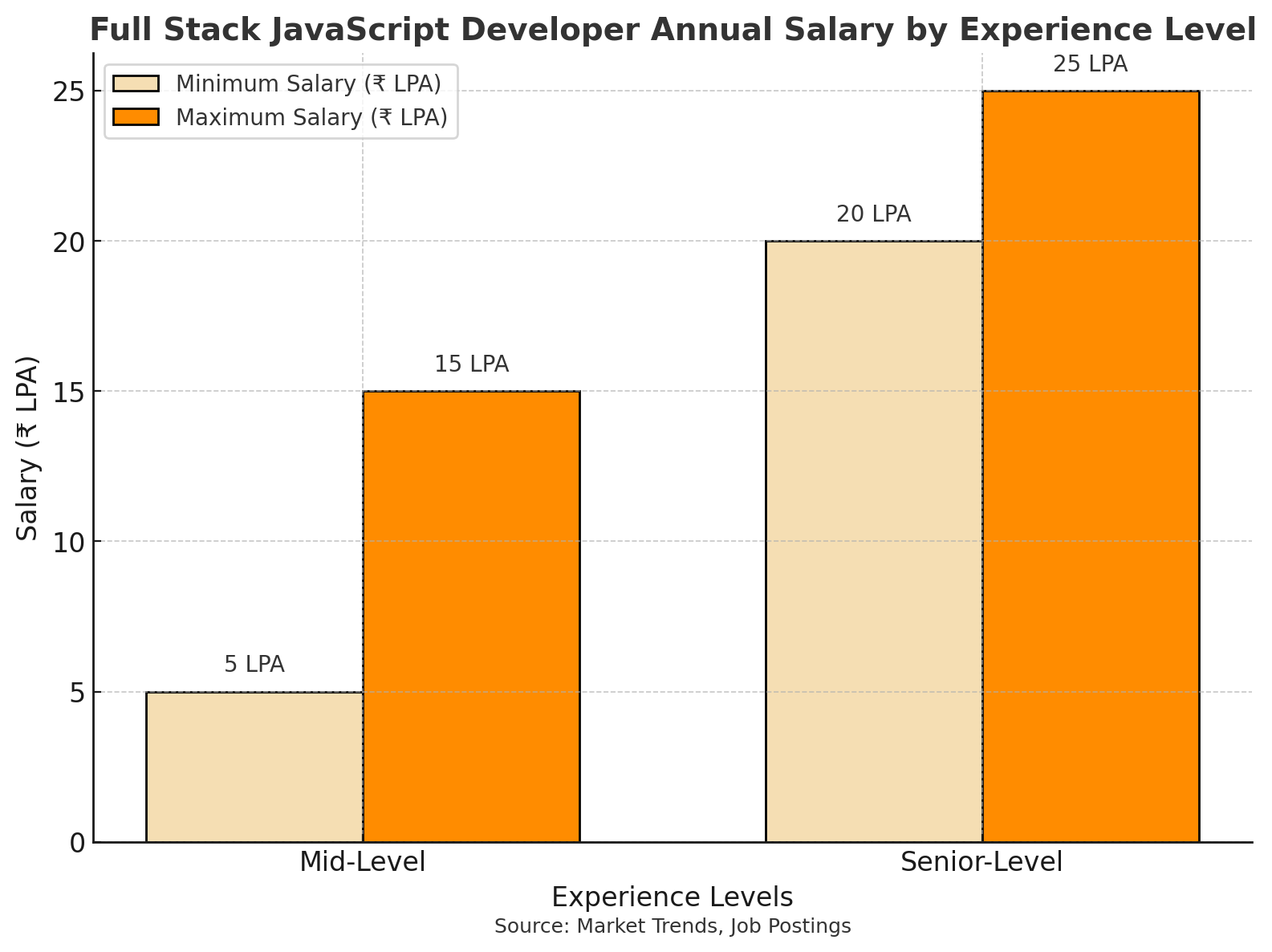
₹05–15 LPA (Mid-level), ₹20+ 25LPA (Senior-Level)

Builds both frontend and backend parts using JavaScript frameworks & tools; integrates APIs; ensures responsive, maintainable, efficient full-stack solutions.
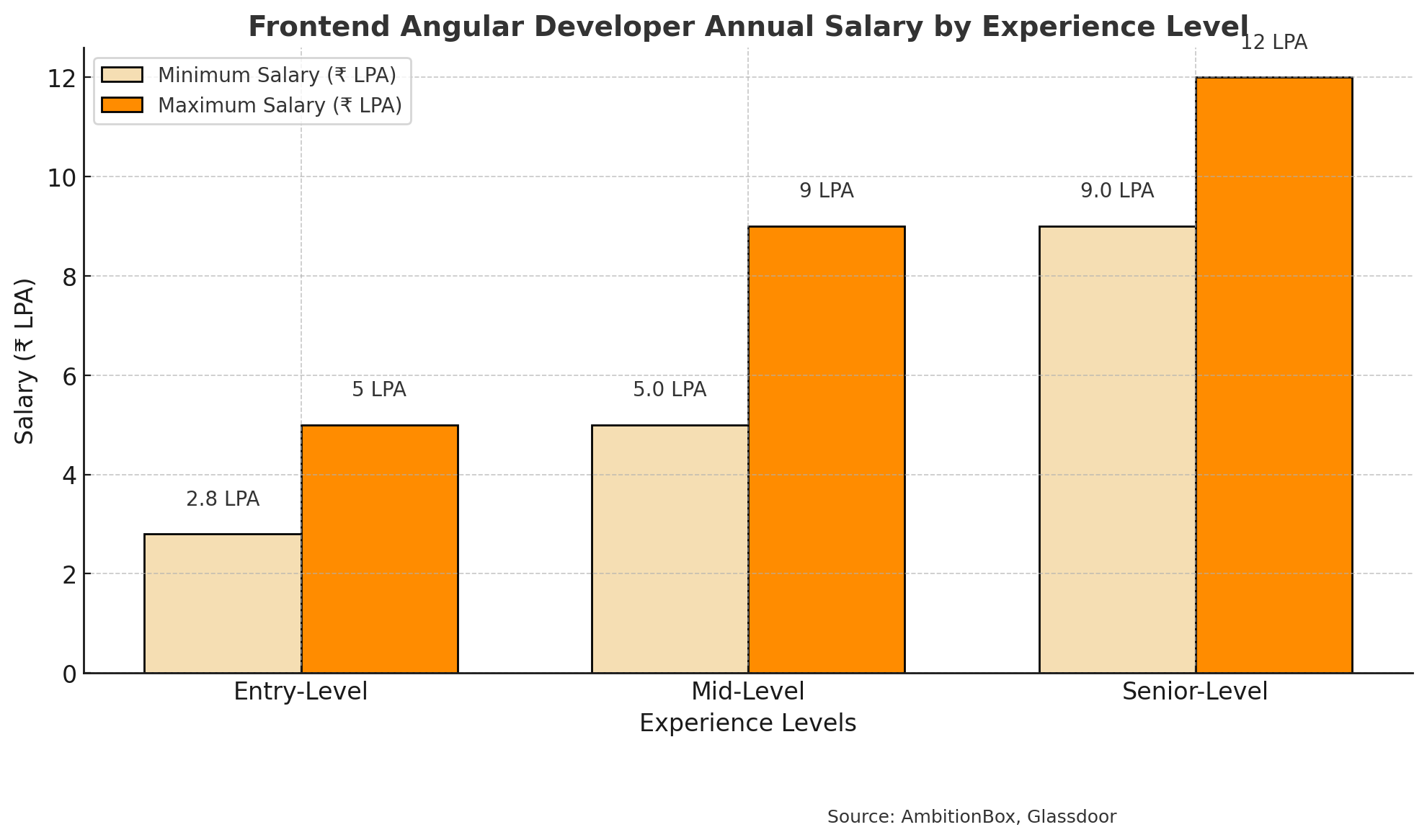
₹2.8–05 LPA (Entry-Level), ₹05–09 LPA (Mid-Level), ₹09+ 12.LPA (Senior-Level)
Creates scalable, interactive user interfaces using React.js, reusable components and modern state management while ensuring cross-browser performance and usability.
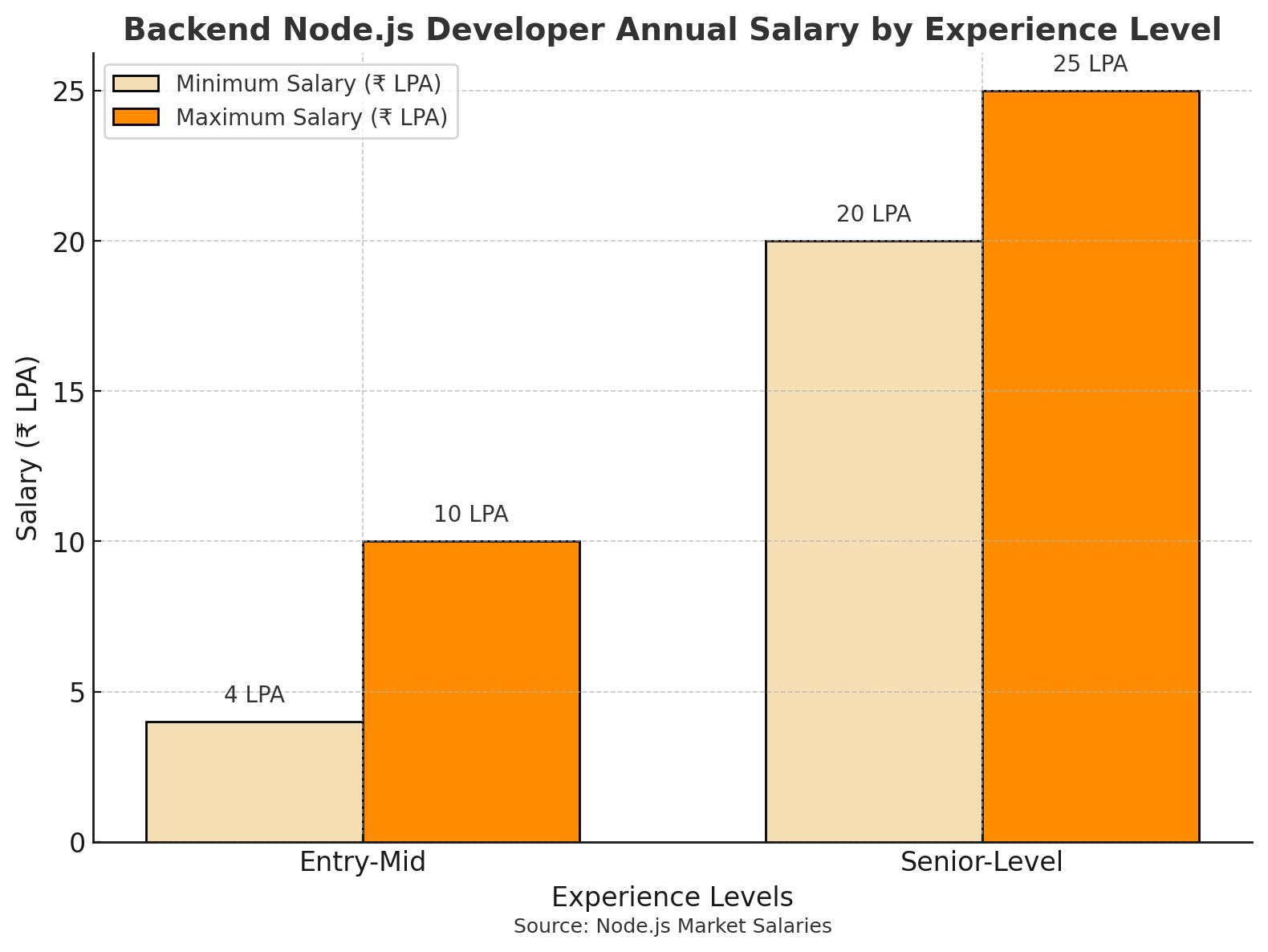
₹04–10 LPA (Entry-Level), ₹20–25 LPA (Senior-Level)

Designs and implements server-side logic using Node.js; handles databases, APIs, performance optimization, ensures robust, secure backend service.
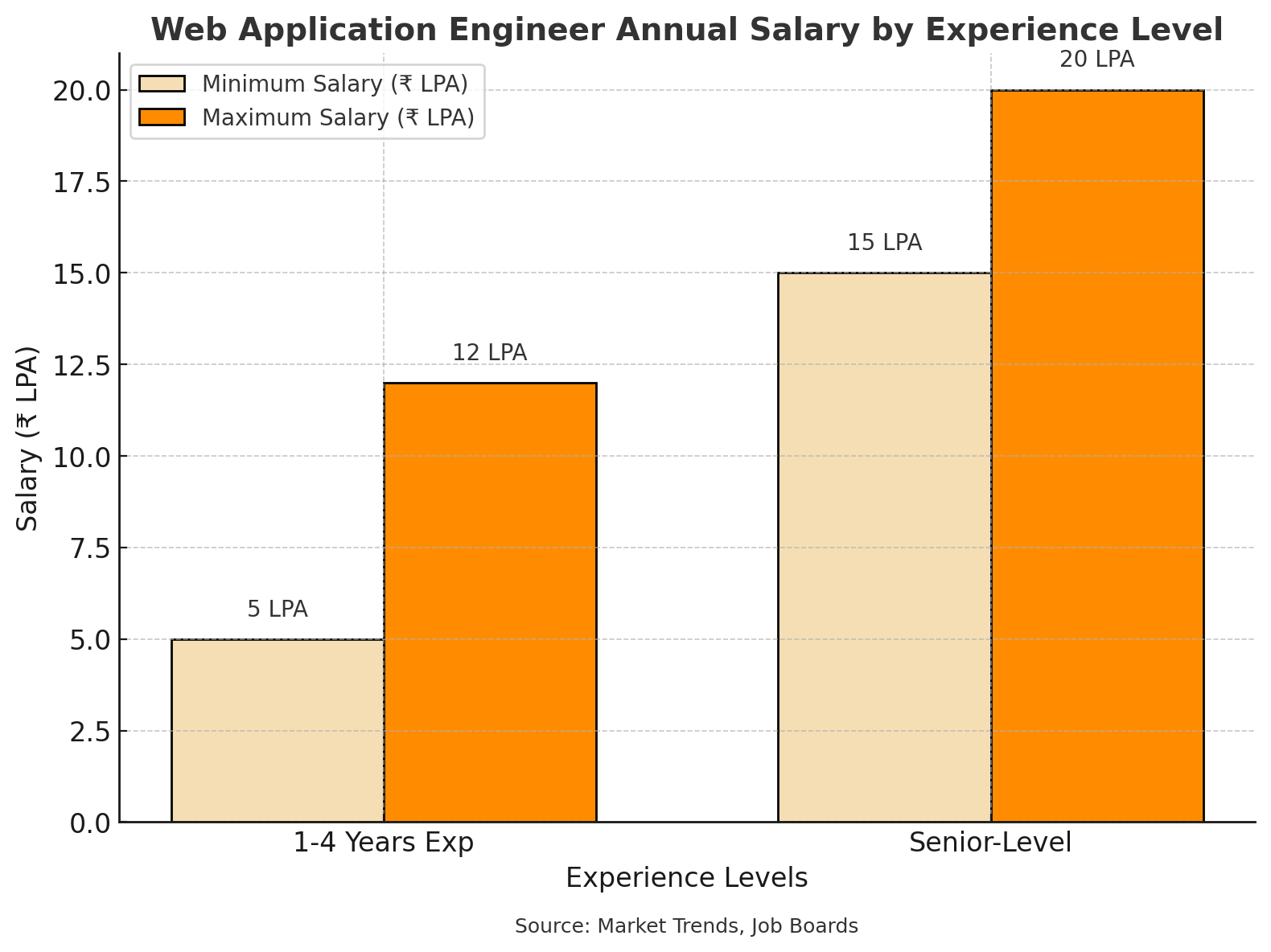
₹04–12 LPA (Entry-Level), ₹15–20 LPA (Senior-Level)

Builds full web applications; handles frontend, backend, integration, ensures good UX, performance, reliability and maintainability.
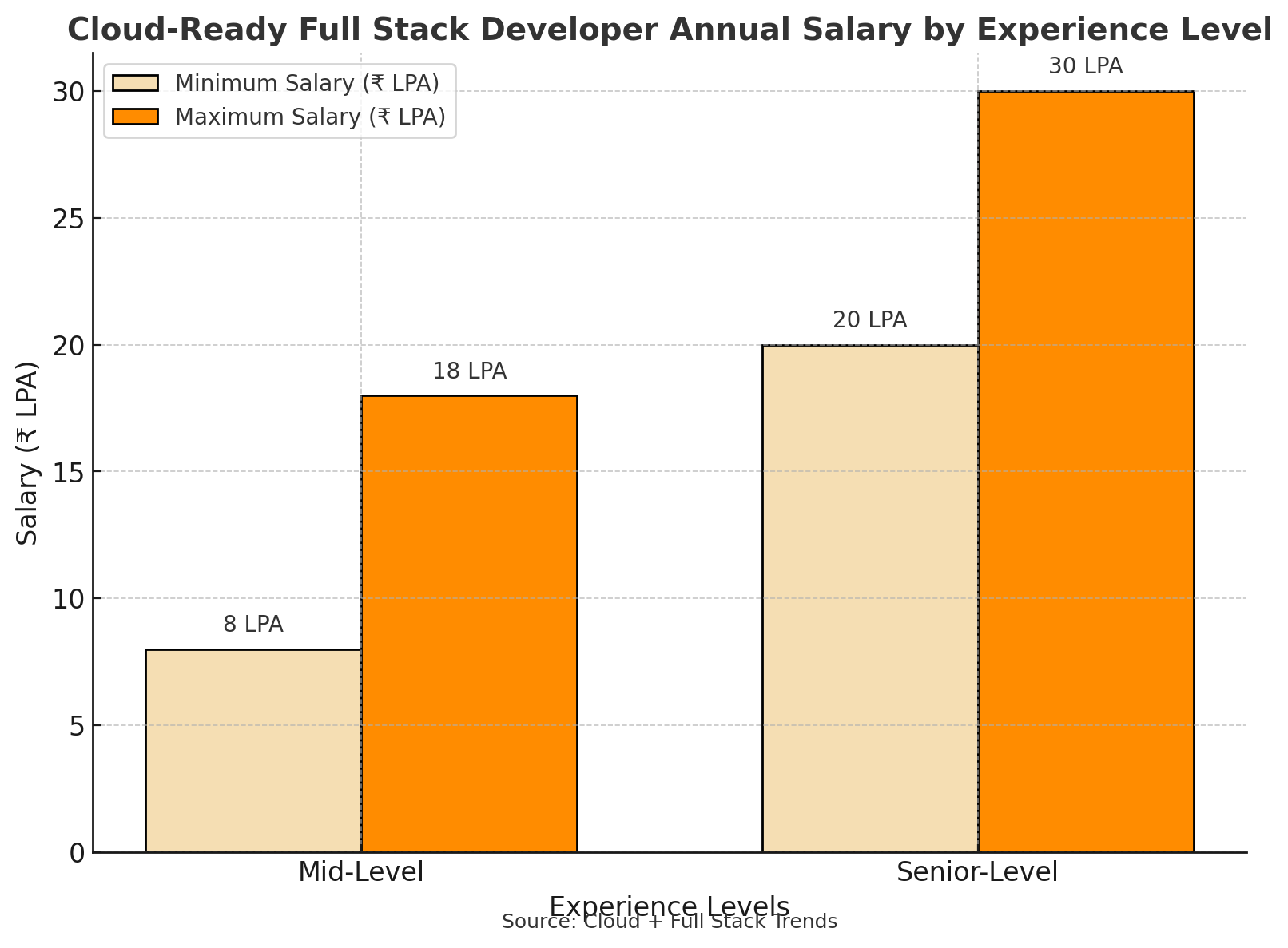
₹08–18 LPA (Entry-Level), ₹20–30 LPA (Senior-Level)

Develops full-stack applications ready for cloud deployment; handles UI to backend, deployment pipelines, scaling, cloud services and best practices.
Develop skills relevant to frontend React developer, backend Node.js developer, MERN stack developer and full stack JavaScript developer roles. This program combines web development practice, Generative AI integration, deployment and interview preparation. Use original projects to demonstrate your skills; hiring and compensation depend on experience, portfolio, interviews and employer requirements.
₹1.8–04 LPA (Entry-Level), ₹04–08 LPA (Mid-Level), ₹08+ 11.LPA (Senior-Level)
Develops full-stack web applications using MongoDB, Express.js, React and Node.js while maintaining performance, scalability, security and a responsive user experience.
₹05–15 LPA (Mid-level), ₹20+ 25LPA (Senior-Level)
Builds both frontend and backend parts using JavaScript frameworks & tools; integrates APIs; ensures responsive, maintainable, efficient full-stack solutions.
₹2.8–05 LPA (Entry-Level), ₹05–09 LPA (Mid-Level), ₹09+ 12.LPA (Senior-Level)
Creates scalable, interactive user interfaces using React.js, reusable components and modern state management while ensuring cross-browser performance and usability.
₹04–10 LPA (Entry-Level), ₹20–25 LPA (Senior-Level)
Designs and implements server-side logic using Node.js; handles databases, APIs, performance optimization, ensures robust, secure backend service.
₹04–12 LPA (Entry-Level), ₹15–20 LPA (Senior-Level)
Builds full web applications; handles frontend, backend, integration, ensures good UX, performance, reliability and maintainability.
₹08–18 LPA (Entry-Level), ₹20–30 LPA (Senior-Level)
Develops full-stack applications ready for cloud deployment; handles UI to backend, deployment pipelines, scaling, cloud services and best practices.
Complete Fullstack Web Development master program with Gen AI is an intensive bootcamp designed to transform beginners into industry-ready full-stack engineers who can build, deploy, and scale modern web applications.
 Duration: 6 months Format: Live online classes + Classroom training + Hands-on projects + Weekly coding challenges + Mock interviews Tech Stack: MongoDB, Express.js, React.js, Node.js, Next.js, GraphQL + AWS Cloud + GenAI Outcome: Build production-grade apps, master full-stack, ace technical interviews, and deploy scalable cloud apps College students (CS/IT & related) aiming for industry-ready skills Career switchers from non-tech backgrounds entering software dev Frontend developers expanding into full-stack with backend expertise Backend developers mastering modern frontend frameworks Working professionals upskilling in MERN + Cloud platforms Aspiring entrepreneurs building web apps and SaaS products Freelancers offering end-to-end web development services Anyone with basic computer knowledge and strong determination
Prerequisites: Basic programming helps but isn’t mandatory — the course starts from fundamentals.
Modern Frontend Development: Build React SPAs with TypeScript, Redux Toolkit, React Query; design UIs with Tailwind, Material UI, Shadcn. Scalable Backend Architecture: Create REST APIs with Node & Express; master MySQL, MongoDB; implement JWT auth and Redis caching. Interview-Ready DSA Expertise: Solve 150+ problems, master Big-O and data structures, crack top-tier interviews. DevOps & Cloud Deployment: Containerize with Docker, build CI/CD pipelines, deploy on AWS, configure NGINX, monitor production apps. Full-Stack Production Projects: Real-time features, payments, comprehensive testing, and enterprise-grade security. Professional Development Workflow: Master Git/GitHub, code reviews, Agile; debug, optimize, and deploy production systems.The full stack web development curriculum progresses from HTML, CSS and JavaScript foundations to React, Node.js, Express.js, MongoDB, SQL, GraphQL and Next.js. The final stage introduces Generative AI integration and deployment. Apply each stage through coding exercises and project briefs; confirm the current six-month batch timetable and practical requirements with GRRAS.
Objective: Master HTML5, CSS3, and responsive design principles to build modern, mobile-first websites with clean semantic structure and professional styling.
1. Personal Portfolio Landing Page – Responsive portfolio with Flexbox, semantic HTML, and contact form
2. Restaurant Menu Website – Grid-based menu layout with multimedia and responsive navigation
3. Product Card Grid – E-commerce product cards with hover effects and CSS animations
Objective: Master JavaScript fundamentals, asynchronous programming, and TypeScript to build interactive, type-safe web applications with modern ES6+ features.
1. Interactive Todo List Application – CRUD operations with DOM, local storage, and drag-drop functionality
2. Weather Dashboard – API integration with async/await, dynamic UI updates, and error handling
3. Expense Tracker with TypeScript – Type-safe expense manager with charts and category filtering
Objective: Learn Git version control and build RESTful APIs with Node.js and Express.js using TypeScript for scalable backend development.
1. File Manager API – File upload/download with directory management and error handling
2. Blog API (In-Memory) – Complete CRUD with RESTful design and Postman testing
3. Authentication System – User registration/login with bcrypt, JWT tokens, and protected routes
Objective: Master both NoSQL and SQL databases with MongoDB/Mongoose and MySQL/Sequelize for flexible data management in full-stack applications.
1. User Management System – MongoDB with validation, profile management, and indexed queries
2. E-commerce Product Catalog – Product CRUD with categories, reviews, and aggregation statistics
3. Library Management System – MySQL with relationships, borrowing system, and complex queries
Objective: Implement secure authentication systems and real-time communication features using JWT, bcrypt, and WebSockets for interactive applications.
1. Task Management API – Complete auth system with task CRUD, filtering, sorting, and notifications
2. Real-time Chat Application – Socket.io chat with private/group rooms, typing indicators, and online status
3. Collaborative Whiteboard – Multi-user real-time drawing with color tools and save functionality
Objective: Master React 19 with hooks, React Router for navigation, and Redux Toolkit for scalable state management in modern single-page applications.
1. E-commerce Product Listing – Product display with cart (Context API), filtering, and optimized rendering
2. Social Media Dashboard – Redux Toolkit state, post CRUD, likes/comments, and RTK Query integration
3. Recipe Finder Application – API integration, search/filter, favorites with custom hooks
Objective: Learn GraphQL as an alternative to REST and build complex React applications with Apollo Client for efficient data fetching.
1. GraphQL Blog Platform – Apollo Client setup with queries, mutations, comments, and pagination
2. Job Board Application – GraphQL job listings with filtering, applications, and real-time updates
3. Social Media Dashboard (Complete) – Full-stack with React, Redux, Socket.io, image upload, and auth
Objective: Build a production-ready E-Learning Platform with complete MERN stack, GraphQL API, role-based access, and payment integration.
1. E-Learning Platform (Major) – Complete platform with courses, enrollments, quizzes, video player, and admin dashboard
2. Course Enrollment System – Standalone module with certificate generation and email notifications
3. Quiz Management System – Question bank, multiple question types, auto-grading, and analytics
Objective: Master Next.js 15 with App Router, Server Components, Server Actions, and Prisma ORM for building modern full-stack applications.
1. Blog Platform with Next.js – Server Components, dynamic routes, Server Actions, and Prisma CRUD
2. E-commerce Store – Product catalog (SSR), shopping cart, checkout with Server Actions, and admin panel
3. Real Estate Platform (Major Capstone) – Property listings, search, maps, chat, wishlist, and reviews
Objective: Integrate OpenAI APIs for AI-powered features and deploy full-stack applications to production using AWS and free hosting platforms.
1. AI Content Management System – AI article generator, summarizer, semantic search, and chatbot
2. AI Customer Support Chatbot – Context-aware chatbot with function calling and vector knowledge base
3. Smart Document Analyzer – PDF/image upload, OCR, summarization, Q&A, and embeddings search
Practise the complete development workflow with eight portfolio project briefs, from responsive interfaces to database-backed applications and Generative AI.
Document source code, APIs, database design, testing and your contribution. Use synthetic data and keep credentials private. Confirm the final project scope and external service costs for your batch.
Skills: Authentication, Role-Based Access, REST APIs, MongoDB Queries, React State ManagementTools/Tech Stack: MongoDB, Express.js, React.js, Node.js, Redux Toolkit Description:Students will create a Job Portal platform for this project that lets companies post job openings and job seekers apply for them online. The project includes JWT authentication, role-based access (Admin/Recruiter/User), and…
Skills: Product Management, Cart System, Authentication, Payment Integration, API HandlingTools/Tech Stack: MongoDB, Express.js, React.js, Node.js, Stripe/PhonePe API, Redux Toolkit Description:Every MERN stack developer should have an e-commerce website in their portfolio. Students will make a full shopping platform for this project. It will have product listings, filters, a product details…
Skills: Role Management, Video Integration, Secure APIs, Payment & Subscription ModelsTools/Tech Stack: MongoDB, Express.js, React.js, Node.js, JWT, Stripe/PhonePe API Description:E-learning is growing quickly all over the world, and creating an LMS shows that you know MERN at a professional level. In this project, students will develop a platform where instructors…
Build a mobile-first portfolio with semantic HTML, responsive CSS, accessible navigation and form validation. Deliver a live demo, source repository and README explaining layout decisions and testing.
Create a type-safe expense tracker with reusable React components, category filters and charts. Deliver source code, sample data, responsive screens and a short explanation of state management and error handling.
Build a REST API and frontend for task CRUD, filtering and role-based access. Practise JWT authentication, hashed passwords, request validation and protected routes. Deliver API documentation, tests and a demo using synthetic accounts.
Build private and group chat rooms with Socket.io, message persistence, typing indicators and online status. Deliver a working frontend/backend demo, repository and notes on authorization, connection recovery and testing.
Develop a syllabus-based customer-support chatbot using an LLM API, embeddings and a vector knowledge base. Use non-sensitive sample documents, server-side credentials and source-grounded answers. Deliver an evaluation set, deployed demo and README describing limitations, API costs and privacy safeguards.
Receive a globally valued certification that validates your skills, practical knowledge, and job-ready expertise. This certification enhances your credibility, strengthens your resume, and helps you stand out to employers in competitive industries worldwide.

Professionals Trained

Countries & Counting

Corporate Served



















Build industry-ready skills with practical learning, expert guidance, real-world projects, and career-focused support. Our programs are designed to help you stay ahead of industry trends and confidently prepare for your professional journey.
Master a curriculum crafted and constantly updated by industry experts to match real-world trends, ensuring every concept and project builds job-ready, future-proof skills.
Receive one-on-one mentorship, resume reviews, mock interviews, and complete placement assistance through our 500+ hiring partners to accelerate your tech career.
Learn directly from certified professionals with years of hands-on experience who guide you through every module, project, and career milestone personally.
Gain practical exposure by working on live, industry-grade projects that mirror real business challenges, strengthening your technical execution and problem-solving abilities.
Join thousands of successful learners who have launched rewarding tech careers through Grras. Our consistent placement results, trusted partnerships, and alumni success stories speak for the quality of our training.
Navigate your professional journey with a comprehensive guide that transforms learning into opportunity. Discover proven strategies to build skills, gain experience, and secure your ideal position in today’s competitive job market.
 Building Strong Foundation
Focus on industry-relevant skills

Real-world projects to implement learned concepts.

Weekly tests to assess progress

 Sharpening Interview Readiness
Mock sessions with real-time feedback from experts

Host industry experts for advanced technical guidance

Focus on problem-solving, critical thinking, and domain expertise

 Communication & Aptitude Skill Development
Through interactive classes, students enhance both verbal and non-verbal communication, while also learning to present their ideas clearly, confidently, and effectively.

Enhances students' problem-solving, analytical thinking, and numerical ability-preparing them for competitive exams and placement tests.
 Resume building masterclasses
Help students structure professional, impactful resumes

 Bridging the Gap
* Partner with top companies for hiring pipelines * Conduct webinars and sessions with recruiters
* Connect candidates to aligned opportunities * Organize hiring events and recruitment drives
 Advance interview boot camp
Equip students to handle high-pressure interview situations
Prepare students for various interview formats, including case studies, coding rounds, and group discussions
 Personalized 1:1 guidance
* Address specific weaknesses and barriers to success. * Develop personalized improvement plans

Focus on industry-relevant skills
Real-world projects to implement learned concepts.
Weekly tests to assess progress
Mock sessions with real-time feedback from experts
Host industry experts for advanced technical guidance
Focus on problem-solving, critical thinking, and domain expertise
Through interactive classes, students enhance both verbal and non-verbal communication, while also learning to present their ideas clearly, confidently, and effectively.
Enhances students' problem-solving, analytical thinking, and numerical ability-preparing them for competitive exams and placement tests.
Help students structure professional, impactful resumes
* Partner with top companies for hiring pipelines * Conduct webinars and sessions with recruiters
* Connect candidates to aligned opportunities * Organize hiring events and recruitment drives
Equip students to handle high-pressure interview situations
Prepare students for various interview formats, including case studies, coding rounds, and group discussions
* Address specific weaknesses and barriers to success. * Develop personalized improvement plans

Our extensive network of hiring partners spans various industries, offering diverse opportunities to kickstart your career.





















Full stack development combines frontend interfaces, backend application logic and databases. This program covers JavaScript, React, Node.js, Express, databases, deployment and Generative AI.
The published program is intended for students, career switchers and developers expanding frontend or backend skills. It starts with fundamentals; confirm batch prerequisites and reserve time for regular coding practice.
MERN stands for MongoDB, Express.js, React and Node.js. The syllabus also includes SQL, TypeScript, Next.js and Generative AI.
Yes. The curriculum begins with semantic HTML, forms, responsive CSS, Flexbox and Grid, then JavaScript, DOM manipulation, asynchronous programming and TypeScript.
The syllabus includes reusable components, hooks, routing, Context API, Redux Toolkit, RTK Query and performance optimisation through practical application projects.
Both are listed. TypeScript supports typed application code; Next.js topics include App Router, server and client components, server actions, authentication and Prisma.
Frontend manages screens and browser interactions. Backend manages APIs, business logic, authentication and data. Full stack projects connect and test both layers.
Compare the syllabus, prerequisites, instructor support, project deliverables, deployment practice and written fee terms. Ask for project examples and the current timetable rather than relying only on placement claims.
Topics include the Node.js runtime, event loop, middleware, REST APIs, request validation and centralised error handling. Projects connect APIs to a frontend and database.
Yes. It lists MongoDB with Mongoose and MySQL with Sequelize, covering CRUD, validation, schema design and relationships. The Next.js module also includes Prisma with PostgreSQL.
A REST API exposes application resources through HTTP requests. A task manager uses endpoints to let authorised users create, read, update and delete tasks.
The syllabus includes bcrypt password hashing, JWT verification, protected routes and role-based access. These are learning exercises; production systems still require security review and testing.
Yes. GraphQL topics include queries, mutations, schemas, Apollo Client, caching and pagination. Socket.io topics include rooms, broadcasting and real-time events.
Check valid requests, invalid inputs, authentication failures and role permissions. Use sample data instead of real personal data and document endpoints for a reproducible demo.
The deployment module lists Vercel, AWS and CI/CD alongside other hosting platforms. Confirm the batch platform and whether paid cloud accounts or usage charges are included.
Include a working demo, repository, setup guide, API documentation, tests and environment examples without secrets. Explain deployment decisions and limitations in the README.
The syllabus includes LLM API integration, prompt engineering, embeddings, semantic search, chatbots and AI workflows. Learners add AI features while reviewing code and evaluating responses.
The syllabus lists a customer-support chatbot. The AI knowledge assistant brief combines a frontend, server-side API integration and sample knowledge base with response evaluation.
Semantic search retrieves information by meaning rather than only exact words. The syllabus introduces embeddings and vector databases for document retrieval and AI features.
The projects include a developer portfolio, React expense dashboard, authenticated task manager, real-time team chat, job portal, e-commerce application, learning management system and AI knowledge assistant. Confirm batch scope with GRRAS.
Start with responsive pages and JavaScript, then React screens, APIs and databases. Combine these in a complete application before adding real-time functionality, deployment or AI features.
Prepare original source code, README, demo, database and API notes, testing evidence and an explanation of your contribution. Do not present a copied tutorial as original work.
Review and understand generated code, test it, check dependencies and licences, and never share secrets or private data. Document meaningful AI assistance where appropriate.
Do not assume they are included. Ask GRRAS for written batch inclusions before enabling paid services. Keep credentials on the server and monitor usage costs.
The published snapshot describes a six-month program. Confirm the current batch timetable, weekly practice expectations and completion requirements before enrolling.
The snapshot lists live online classes and classroom training. Availability depends on batch and location; request the specific mode, schedule and recording access in writing.
Contact GRRAS for a current written quotation, including taxes, instalments, refund terms and any separate certification, software, API or cloud charges.
Regular practice requires a computer capable of running a code editor, browser, Node.js and database tools. Confirm batch system requirements and lab availability before buying hardware.
The overview lists coding challenges, mock interviews and DSA practice. Confirm batch inclusions; preparation does not guarantee interview selection.
Relevant paths include frontend React developer, backend Node.js developer, full stack JavaScript developer and web application developer. Hiring depends on skills, portfolio, experience and employer requirements.
Do not assume a guaranteed outcome. Hiring and pay depend on skills, portfolio, interviews and market conditions. Request any placement support terms from GRRAS in writing.
Publish well-documented original projects with working demos, meaningful commits, tests and setup instructions. Explain your contribution, trade-offs and improvements rather than only listing tools.
Full stack development combines frontend interfaces, backend application logic and databases. This program covers JavaScript, React, Node.js, Express, databases, deployment and Generative AI.
The published program is intended for students, career switchers and developers expanding frontend or backend skills. It starts with fundamentals; confirm batch prerequisites and reserve time for regular coding practice.
MERN stands for MongoDB, Express.js, React and Node.js. The syllabus also includes SQL, TypeScript, Next.js and Generative AI.
Yes. The curriculum begins with semantic HTML, forms, responsive CSS, Flexbox and Grid, then JavaScript, DOM manipulation, asynchronous programming and TypeScript.
The syllabus includes reusable components, hooks, routing, Context API, Redux Toolkit, RTK Query and performance optimisation through practical application projects.
Both are listed. TypeScript supports typed application code; Next.js topics include App Router, server and client components, server actions, authentication and Prisma.
Frontend manages screens and browser interactions. Backend manages APIs, business logic, authentication and data. Full stack projects connect and test both layers.
Compare the syllabus, prerequisites, instructor support, project deliverables, deployment practice and written fee terms. Ask for project examples and the current timetable rather than relying only on placement claims.
Topics include the Node.js runtime, event loop, middleware, REST APIs, request validation and centralised error handling. Projects connect APIs to a frontend and database.
Yes. It lists MongoDB with Mongoose and MySQL with Sequelize, covering CRUD, validation, schema design and relationships. The Next.js module also includes Prisma with PostgreSQL.
A REST API exposes application resources through HTTP requests. A task manager uses endpoints to let authorised users create, read, update and delete tasks.
The syllabus includes bcrypt password hashing, JWT verification, protected routes and role-based access. These are learning exercises; production systems still require security review and testing.
Yes. GraphQL topics include queries, mutations, schemas, Apollo Client, caching and pagination. Socket.io topics include rooms, broadcasting and real-time events.
Check valid requests, invalid inputs, authentication failures and role permissions. Use sample data instead of real personal data and document endpoints for a reproducible demo.
The deployment module lists Vercel, AWS and CI/CD alongside other hosting platforms. Confirm the batch platform and whether paid cloud accounts or usage charges are included.
Include a working demo, repository, setup guide, API documentation, tests and environment examples without secrets. Explain deployment decisions and limitations in the README.
The syllabus includes LLM API integration, prompt engineering, embeddings, semantic search, chatbots and AI workflows. Learners add AI features while reviewing code and evaluating responses.
The syllabus lists a customer-support chatbot. The AI knowledge assistant brief combines a frontend, server-side API integration and sample knowledge base with response evaluation.
Semantic search retrieves information by meaning rather than only exact words. The syllabus introduces embeddings and vector databases for document retrieval and AI features.
The projects include a developer portfolio, React expense dashboard, authenticated task manager, real-time team chat, job portal, e-commerce application, learning management system and AI knowledge assistant. Confirm batch scope with GRRAS.
Start with responsive pages and JavaScript, then React screens, APIs and databases. Combine these in a complete application before adding real-time functionality, deployment or AI features.
Prepare original source code, README, demo, database and API notes, testing evidence and an explanation of your contribution. Do not present a copied tutorial as original work.
Review and understand generated code, test it, check dependencies and licences, and never share secrets or private data. Document meaningful AI assistance where appropriate.
Do not assume they are included. Ask GRRAS for written batch inclusions before enabling paid services. Keep credentials on the server and monitor usage costs.
The published snapshot describes a six-month program. Confirm the current batch timetable, weekly practice expectations and completion requirements before enrolling.
The snapshot lists live online classes and classroom training. Availability depends on batch and location; request the specific mode, schedule and recording access in writing.
Contact GRRAS for a current written quotation, including taxes, instalments, refund terms and any separate certification, software, API or cloud charges.
Regular practice requires a computer capable of running a code editor, browser, Node.js and database tools. Confirm batch system requirements and lab availability before buying hardware.
The overview lists coding challenges, mock interviews and DSA practice. Confirm batch inclusions; preparation does not guarantee interview selection.
Relevant paths include frontend React developer, backend Node.js developer, full stack JavaScript developer and web application developer. Hiring depends on skills, portfolio, experience and employer requirements.
Do not assume a guaranteed outcome. Hiring and pay depend on skills, portfolio, interviews and market conditions. Request any placement support terms from GRRAS in writing.
Publish well-documented original projects with working demos, meaningful commits, tests and setup instructions. Explain your contribution, trade-offs and improvements rather than only listing tools.



Copyright © 2026 GRRAS Solutions Pvt. Ltd.





 Whatsapp us
 Call us
 Enquire Now