• ISO Certified

  • AI-Powered

Design, Deploy, Scale — Master AWS Cloud!

Master cloud architecture and infrastructure with our comprehensive AWS Certified Solutions Architect training program. Designed for aspiring cloud professionals, this course equips you with in-demand skills to design, build, and operate secure, scalable applications on AWS.

375 reviews4.8
Internship Student
6K+
Successfully Trained

AWS Cloud Internship
with Grras

We are globally connected with leading IT companies across diverse industries. Our dedicated placement cell continuously engages with top-tier organizations to create direct career pathways for our certified professionals.

https://grras.com/wp-content/uploads/2026/01/intern_icon1.png
15K+ Classes Completed
https://grras.com/wp-content/uploads/2026/01/intern_icon2.png
97% Satisfaction Rate
https://grras.com/wp-content/uploads/2026/01/intern_icon3.png
102K+ Students Community

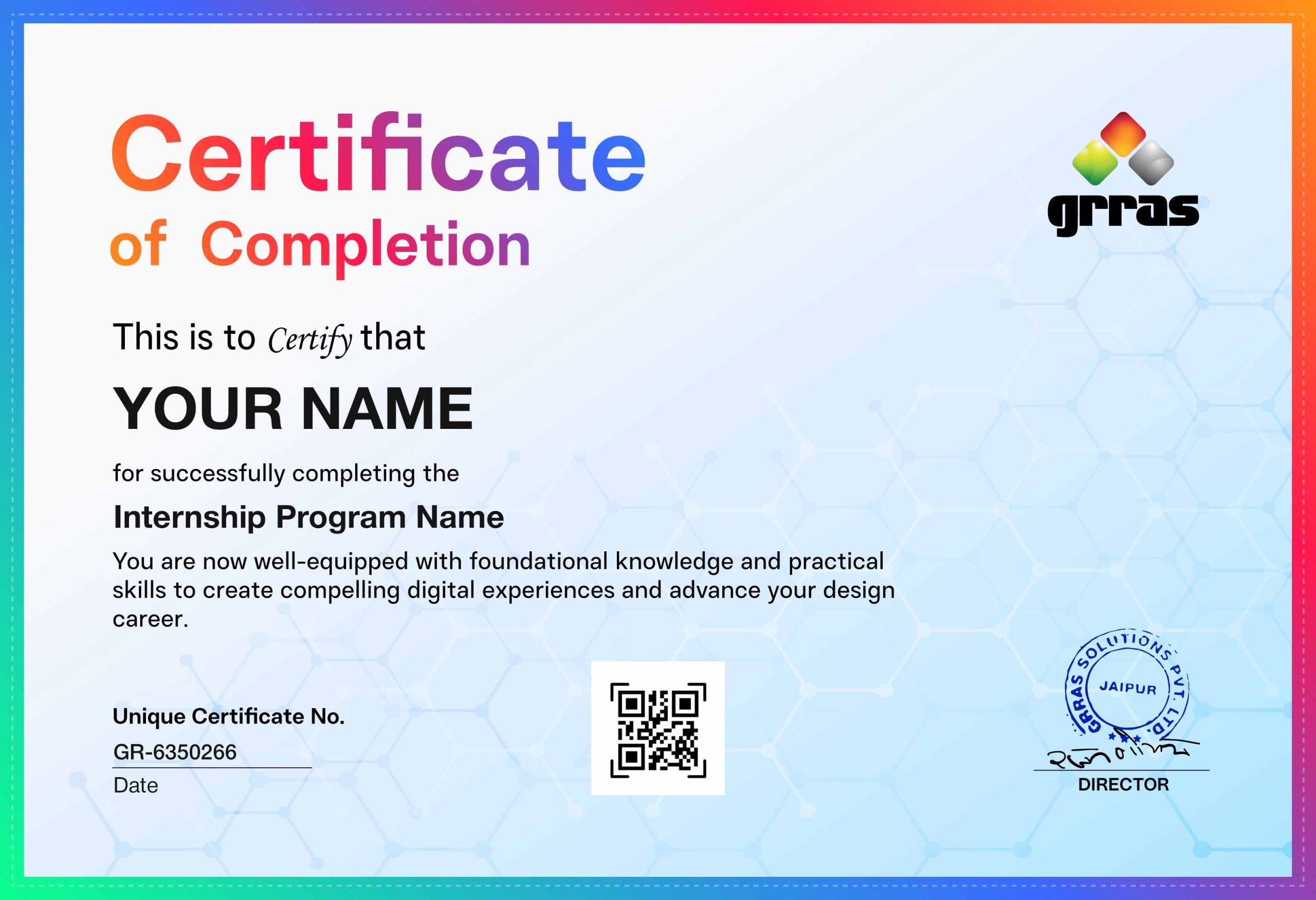
Earn an ISO-Certified Training Certificate

Earn an industry-recognized AWS Cloud Certification that validates your expertise in designing, deploying, and managing secure, scalable, and cost-efficient cloud infrastructures. This credential highlights your practical skills in AWS architecture, networking, storage, automation, and security management. Whether you’re starting your career or advancing in cloud computing, this certification demonstrates your ability to build and optimize cloud solutions — opening doors to high-demand roles in cloud engineering, DevOps, and enterprise architecture worldwide.

AWS Cloud Internship Curriculum with Grras Solutions

Our expertly crafted curriculum encompasses cloud fundamentals, AWS core services, networking architecture, and advanced deployment strategies. Each module builds progressive expertise through real-world scenarios and hands-on practical exercises. You'll master everything from VPC configuration to database management, security implementation, and disaster recovery planning—equipping you with comprehensive AWS knowledge for certification success.

Identity Access Management

  • IAM Account Management
    • Managing the credentials for your AWS account
    • Password Policy and Multi Factor Authentication (MFA)
  • IAM Users and Group
    • Fundamental of IAM and AWS account management
    • Root Account vs Power user
    • Default Permissions for a new user
    • Usage of Access key Id and how it differs from account login credentials
  • Policy Document
    • Format of Policy Document
    • Understanding JSON structure
  • Roles
    • Creation of a role
    • Relationship with policy document
    • Types: Service Roles, Cross Account Access and Identity Provider Access
  • Cognito
    • Managing User Pools
    • Managing Identity Pools

Simple Storage Service (S3)

  • Storage Tier and Classes
    • Use cases for Standard S3, S3-IA and Glacier
    • Size limitations, availability and durability numbers
    • Namespace and URL of a bucket
    • Static website hosting topics
  • Access Control
    • Difference between bucket and user policies
    • Usage of access control lists (ACLs)
  • Versioning and Lifecycle Management
    • Object size and transition duration limitations
    • Cross region replication

Other Storage and Content Delivery Topics

  • CloudFront
    • Origin Types
    • Difference between Web and RTMP distribution
    • Geo restriction features
    • Time To Live (TTL)
    • Using Signed URL
  • Import and Export
    • Snowball
  • Storage Gateway
    • Gateway-cached Volumes
    • Gateway-stored Volumes
    • Gateway-virtual Tape Library

Elastic Compute Cloud (EC2)

  • EC2 Instance Types
    • General Purpose, Compute, Memory, GPU and Storage Optimized
    • Enhanced Networking, EBS Optimized and High I/O
    • Spot and Reserved Purchase Options
    • Termination Protection
  • EBS Volume Types
    • Instance Backed vs EBS Backed
    • Encryption
  • EBS Snapshots
    • Creating and sharing snapshots between regions
    • Volume vs Snapshot
  • Security Groups and IAM Role
    • Creating a Security group, IAM role
    • Changing Security group and IAM role after instance launch
    • Security group’s Inbound/Outbound rules
  • Amazon Machine Image
    • Types of AMIs
    • Creating and sharing AMIs between regions
  • Elastic Load Balancer
    • Configure ELB
    • Healthy and unhealthy thresholds
  • Auto Scaling
    • Launch configuration parameters
    • Multi AZ Autoscaling
    • Three types of auto scaling policies: Simple, Step, Schedule

Amazon Route 53 (DNS)

  • Record Types
    • Types of DNS Records: A, CNAME, etc.
    • Use of ALIAS record
  • Routing Policies
    • Simple
    • Weighted
    • Latency
    • Failover
    • Geolocation

Amazon Database Services

  • RDS Basics
    • 6 different database engines that RDS supports
    • Multi AZ deployment
    • RDS maintenance window
    • DB Multi AZ replication
    • Read Replica and limitations
    • BYOL and license included model
  • RDS in VPC
    • RDS setup in VPC
    • Usage of security groups for RDS
  • DynamoDB
    • DB format and types of data stored
    • Overview of pricing
    • Scaling advantage against RDS
  • Redshift
    • OLAP vs OLTP
    • Single vs multi node
    • Overview of columnar data storage, data compression
    • Encryption using KMS and HSM
  • Elastic Cache
    • Memcached vs Redis
    • Use cases for Elastic cache

Amazon Virtual Private Cloud (VPC)

  • VPC Basics
    • Default vs Custom
    • Private and Public Subnet creation with valid CIDR block
    • Create and assign Internet Gateway
    • VPC tenancy
    • Routing Tables for private and public subnets
    • Launching instances inside VPC
    • Behaviour of Public and Private IPs
    • Use cases of Elastic IP
    • VPC endpoint of S3
  • Network Address Translation
    • Use case for NAT instance
    • Use case for NAT gateway
    • Routing table configuration
  • Network Access Control List
    • Security groups vs Network Access Control List
    • Stateful vs Stateless rules
    • Rules evaluation order
    • Association with Subnet
  • VPC Peering
    • Peering in context of region
    • Cross account peering
    • IP address range impacts on peering
  • VPN Connection
    • Setting up hardware VPN
    • Customer and Private Gateways
  • Direct Connect
    • Use cases and advantages
    • Direct Connect vs VPN
    • Connecting Virtual Interfaces of VPC

Application Services

  • Simple Queue Service
    • Overview of SQS queue with use case
    • Size of SQS message and billing method
    • Integration with Lambda and auto scale
    • Support of First In First Out
    • Message Visibility Timeout
    • Retention period of SQS messages
  • Simple Workflow Service
    • Use cases
    • Definition of Domains, Workflows, Tasks, Workers, Deciders and Starters
    • Retention period
    • SQS vs SWF
  • Simple Notification Service
    • Overview of SNS with use cases
    • Supported protocols
    • SNS message format
    • SQS vs SNS

Serverless Architecture

  • Lambda
    • What is Serverless
    • How lambda works
    • Creating Function and Trigger
    • Testing and Function invocation
  • API Gateway
    • What is API gateway
    • How it works
    • Origin Resource Sharing
  • Elastic Transcoder
    • What is Elastic transcoder
    • How it works
  • Kinesis
    • Create a stream and function trigger
    • Test the function

Monitoring and Governance Services

  • CloudTrail
    • What is CloudTrail
    • How it works
    • Creating a custom trail
  • CloudWatch
    • What is CloudWatch
    • Configuring Metrics
    • Configuring Alarms
  • CloudFormation
    • Stacks – Create, Manage, Provision and Update
    • Creating custom Templates

Get ahead in your career by learning top AI tools title

ChatGPT & Gemini to explore datasets, analyse data, generate code, and develop models
Debugcode.ai to solve any coding problem within seconds

Build Real-World Ethical Hacking & Cyber Security Projects

Essential AWS Cloud Tools Covered in This Course

From Training to Placement A Roadmap to Success

Navigate your professional journey with a comprehensive guide that transforms learning into opportunity. Discover proven strategies to build skills, gain experience, and secure your ideal position in today's competitive job market.

Expert Training sessions123

Focus on industry-relevant skills

Hands on projects & Assignments

Real-world projects to implement learned concepts.

Performance Tracking

Weekly tests to assess progress

Mock Interviews

Mock sessions with real-time feedback from experts

Expert Sessions

Host industry experts for advanced technical guidance

Skill Refinement Tasks

Focus on problem-solving, critical thinking, and domain expertise

Effective Communication & Presentation Skills

Through interactive classes, students enhance both verbal and non-verbal communication, while also learning to present their ideas clearly, confidently, and effectively.

Aptitude & Logical Reasoning Training

Enhances students' problem-solving, analytical thinking, and numerical ability-preparing them for competitive exams and placement tests.

Step by step guidance

Help students structure professional, impactful resumes

Industry networking

* Partner with top companies for hiring pipelines
* Conduct webinars and sessions with recruiters

Placement coordination

* Connect candidates to aligned opportunities
* Organize hiring events and recruitment drives

Stress Management Techniques

Equip students to handle high-pressure interview situations

Scenario-Based Training

Prepare students for various interview formats, including case studies, coding rounds, and group discussions

Individual Sessions

* Address specific weaknesses and barriers to success.
* Develop personalized improvement plans

Our mission revolves around our learners

Promising 100% #CareerSuccess!

Download Placement Report
Techno

Techno

S S jain subodh college

S S jain subodh college

Jaipur National uni.

Jaipur National uni.

ARYA College

ARYA College

Sangam University

Sangam University

Career Point University

Career Point University

PIET

PIET

Geetanjali University

Geetanjali University

JECRC University

JECRC University

Empowering Learners Through Strong Alliances

At Grras Solutions, we collaborate with 45+ academic institutions and industry leaders to ensure our programs align with real-world demands. By integrating professional training, certifications, and hands-on experiences, we empower students to excel in today’s competitive job market.

45+

Partners

1000+ Students

Impacted Annually
Visuals of collaborations (trainings, hackathons, certifications)

600+ Hiring Partners Across Industries

Our extensive network of hiring partners spans various industries, offering diverse opportunities to kickstart your career.

Our Proven Track Record Shows that we Walk the Talk

Benefits of Interning with Us

Emphasize the advantages of joining the internship.

Industry-relevant skills

Gain cutting-edge skills aligned with current market demands, making you industry-ready.

Practical experience

Build an impressive resume/portfolio with hands-on projects and professional-grade outputs.

Real-time problem-solving exposure

Tackle real-world challenges, enhancing critical thinking and technical expertise.

Career opportunities via Grras

Unlock placement opportunities through Grras' extensive professional network and connections.

Resume writing & tech events

Participate in industry-specific competitions and events to expand knowledge and showcase talent.

Mentorship from experts

Learn directly from seasoned professionals, receiving guidance and feedback to boost your career trajectory.

Grras vs Other Internships

Unlike typical internships, Grras Solutions offers a comprehensive learning experience, combining ISO-certified training, real-world projects, dedicated mentorship, and personalized placement support. Our programs are designed to build job-ready skills, boost confidence, and provide a clear path to career success, making us a preferred choice for aspiring professionals.

Video Courses Bootcamps Grras
Practical, Real-World Experience
Project-Based Learning
Live, Expert-Led Sessions
Professional Portfolio Development
Industry Partnerships / Externship
Career Coaching
Direct Job Referrals

Have doubts about Full Stack Placement Course? Reach out to our counsellors by filling this form.

Highly Recommended Internship

Frequently Asked Questions

Yes, you will get Microsoft’s Azure Administrator certification, which will show that you know how to manage cloud services and open up new job opportunities for you.

Yes, employers see AZ-104 as proof that you can handle Azure resources, which makes it more likely that you’ll get a high-paying job.

You can be an Azure Administrator, an Infrastructure Specialist, a Security Administrator, a Systems Engineer, a Cloud Support Engineer, or an IT Operations Manager.

Yes, placement support includes help with your resume, preparing for interviews, and finding jobs to help you get Azure cloud administration jobs.

Yes, Azure administrators are very important in many fields, which is why AZ-104 certification is one of the most sought-after cloud skills in the world.

You will learn how to use Azure CLI, PowerShell, Azure Monitor, ARM templates, Azure Portal, and tools for managing resources like compute, networking, storage, and monitoring.

Yes, the training starts with the basics of Azure and moves on to more advanced topics like governance, monitoring, networking, and security administration at the enterprise level.

Yes, projects involve setting up virtual networks, managing storage, implementing monitoring, and automating infrastructure tasks using CLI and PowerShell.

Yes, you will learn how to use Azure to create virtual networks, set up governance policies, and protect cloud environments for businesses.

Yes, the course covers Azure Monitor, Log Analytics, PowerShell, and CLI, which are all tools that can be used to automate tasks and keep an eye on cloud infrastructures at the enterprise level.

Deploying virtual machines, setting up VNets, managing storage, automating provisioning, and making monitoring dashboards in the Azure cloud are all part of the projects.

Yes, all of the projects are ready for your portfolio. They show that you know how to manage compute, networking, storage, and monitoring in enterprise cloud environments.

Yes, you will set up RBAC, governance policies, and access controls to make sure that Azure administration projects are ready for real-world use.

Yes, students will set up Azure Monitor dashboards, Log Analytics alerts, and make resource monitoring solutions for Azure apps and services.

Yes, students use CLI and PowerShell to automate real projects, set up resources, and manage cloud infrastructure efficiently.

Yes, you can get both types. Learners can choose between interactive online classes and traditional classroom training, depending on what works best for them.

Yes, flexible schedules let professionals learn how to manage Azure while still working, which helps them keep growing in their cloud and Azure careers.

Yes, we record all of the sessions. Students can go back and review topics they missed at any time using recordings, study notes, and project assignments that are available on the learning platform.

Yes, students get lifetime access to course notes, project files, and recordings so they can review and improve their skills whenever they need to.

Yes, certified Azure experts help students learn by explaining ideas, mentoring projects, solving problems, and giving career advice during the whole training program.

Yes, you will get Microsoft’s Azure Administrator certification, which will show that you know how to manage cloud services and open up new job opportunities for you.

Yes, employers see AZ-104 as proof that you can handle Azure resources, which makes it more likely that you’ll get a high-paying job.

You can be an Azure Administrator, an Infrastructure Specialist, a Security Administrator, a Systems Engineer, a Cloud Support Engineer, or an IT Operations Manager.

Yes, placement support includes help with your resume, preparing for interviews, and finding jobs to help you get Azure cloud administration jobs.

Yes, Azure administrators are very important in many fields, which is why AZ-104 certification is one of the most sought-after cloud skills in the world.

You will learn how to use Azure CLI, PowerShell, Azure Monitor, ARM templates, Azure Portal, and tools for managing resources like compute, networking, storage, and monitoring.

Yes, the training starts with the basics of Azure and moves on to more advanced topics like governance, monitoring, networking, and security administration at the enterprise level.

Yes, projects involve setting up virtual networks, managing storage, implementing monitoring, and automating infrastructure tasks using CLI and PowerShell.

Yes, you will learn how to use Azure to create virtual networks, set up governance policies, and protect cloud environments for businesses.

Yes, the course covers Azure Monitor, Log Analytics, PowerShell, and CLI, which are all tools that can be used to automate tasks and keep an eye on cloud infrastructures at the enterprise level.

Deploying virtual machines, setting up VNets, managing storage, automating provisioning, and making monitoring dashboards in the Azure cloud are all part of the projects.

Yes, all of the projects are ready for your portfolio. They show that you know how to manage compute, networking, storage, and monitoring in enterprise cloud environments.

Yes, you will set up RBAC, governance policies, and access controls to make sure that Azure administration projects are ready for real-world use.

Yes, students will set up Azure Monitor dashboards, Log Analytics alerts, and make resource monitoring solutions for Azure apps and services.

Yes, students use CLI and PowerShell to automate real projects, set up resources, and manage cloud infrastructure efficiently.

Yes, you can get both types. Learners can choose between interactive online classes and traditional classroom training, depending on what works best for them.

Yes, flexible schedules let professionals learn how to manage Azure while still working, which helps them keep growing in their cloud and Azure careers.

Yes, we record all of the sessions. Students can go back and review topics they missed at any time using recordings, study notes, and project assignments that are available on the learning platform.

Yes, students get lifetime access to course notes, project files, and recordings so they can review and improve their skills whenever they need to.

Yes, certified Azure experts help students learn by explaining ideas, mentoring projects, solving problems, and giving career advice during the whole training program.

Need Help? Talk to us at +91-8448-448523 or WhatsApp us at +91-9001-991813 or REQUEST CALLBACK
Enquire Now