• ISO Certified

  • AI-Powered

Master Database Management with MySQL

The MySQL Database Administration & Development Internship at GRRAS Solutions is designed to provide students with practical exposure to modern relational database technologies and real-world data management applications. The program

253 reviews3.2
Internship Student
10K+
Successfully Trained

Master Database Management with MySQL With Grras

Master the future of data management with our comprehensive MySQL Database Administration and Development course. Gain in-depth expertise in Relational Schema Design, Query Optimization, Transaction Management, and Database Security. Learn industry-standard tools including MySQL Workbench, phpMyAdmin, Command Line Interfaces, and Cloud Database Services to build robust, scalable, and high-performance backend systems.

https://grras.com/wp-content/uploads/2025/10/15.png
19K+ Classes Completed
https://grras.com/wp-content/uploads/2025/10/97.png
95% Satisfaction Rate
https://grras.com/wp-content/uploads/2025/10/102.png
120K+ Students Community

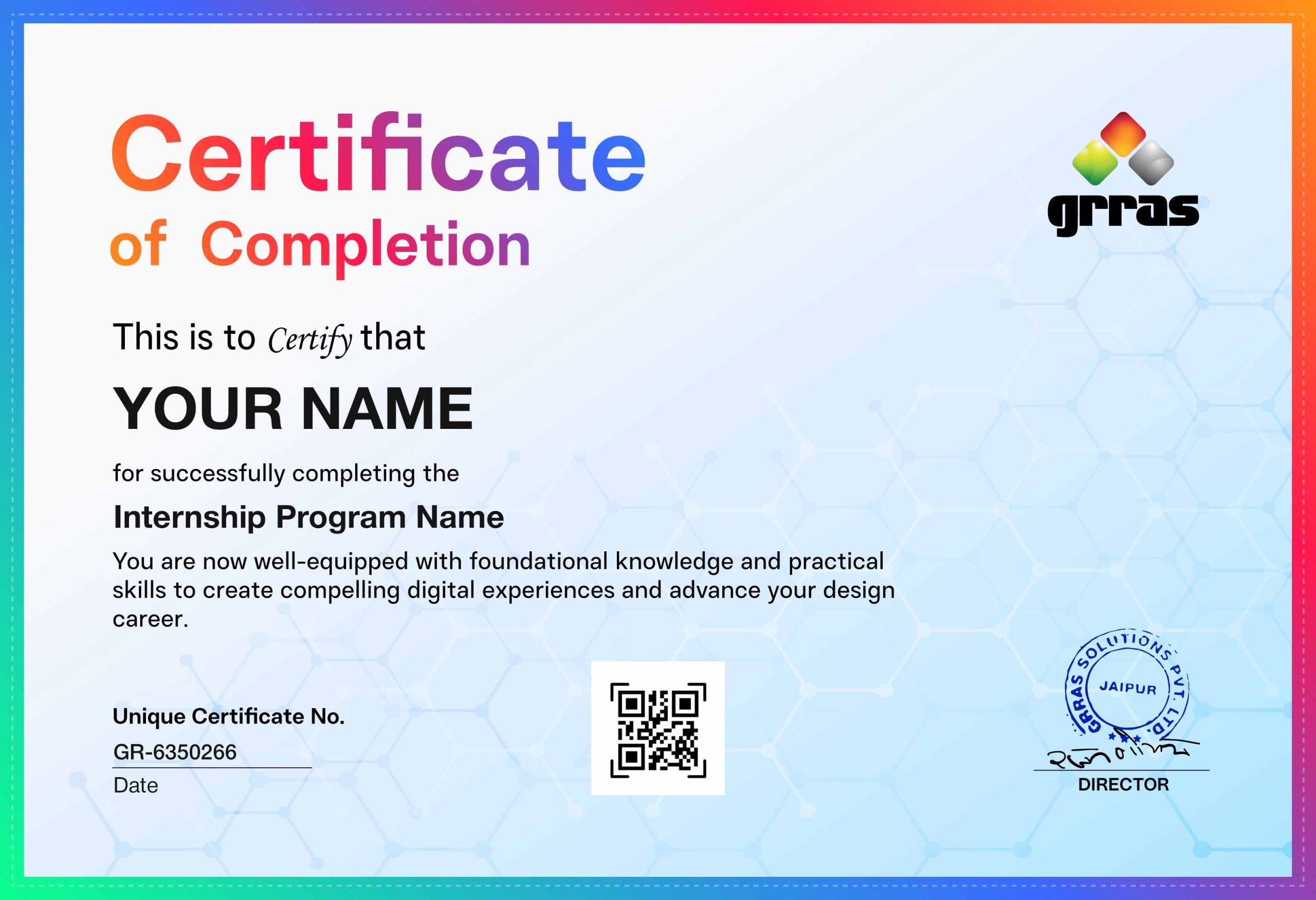
Earn an ISO-Certified Training Certificate

This certificate is awarded to learners who have successfully completed the MySQL Database Management training program offered by GRRAS Solutions Pvt. Ltd. The program covers essential database concepts including relational database fundamentals, SQL queries, data manipulation, and database design. Participants gain practical experience in creating, managing, and optimizing databases using MySQL for real-world applications.

Certificate Highlights

  • Issued by GRRAS Solutions Pvt. Ltd.
  • LinkedIn Shareable Certificate to showcase your professional achievement
  • Digital Credential that can be verified online
  • Lifetime Validity of the certificate
  • Recognizes practical skills in MySQL Database Management
  • Demonstrates knowledge of SQL queries, database design, and data management
Apply for Internship

Database Course Overview

The Database (MySQL) Course is designed to help learners build a strong foundation in database management, SQL queries, and relational database concepts. MySQL is one of the most widely used database technologies in modern web applications, enterprise systems, and data-driven platforms. This course introduces learners to how databases store, organize, and manage large volumes of data efficiently using structured query language (SQL).

Throughout the program, participants will learn essential database concepts such as database design, normalization, table relationships, primary keys, foreign keys, and indexing. The course focuses heavily on practical learning, enabling students to write SQL queries, perform CRUD operations, manage data, and optimize database performance for real-world applications.

Learners will also explore advanced topics including joins, aggregate functions, transactions, stored procedures, triggers, and query optimization. These skills are crucial for roles in Data Analytics, Backend Development, Software Engineering, and Database Administration.

By the end of the course, participants will gain hands-on experience in designing and managing MySQL databases, writing efficient SQL queries, and implementing real-world database solutions. The program also includes practical assignments, real-world projects, and an industry-recognized certificate from GRRAS Solutions, which can be shared on professional platforms like LinkedIn.

Database Course Curriculum

Module 1: Introduction to MySQL & Database Basics

  • Introduction to Databases & RDBMS – Concepts of databases, relational vs. non-relational databases.
  • Introduction to MySQL – Installation & Setup – Installing MySQL, setting up Workbench & CLI.
  • MySQL Workbench & Command Line Basics – Connecting, executing queries, and exploring schema.
  • Basic SQL Syntax & Data Types – Understanding different MySQL data types and query syntax.
  • Creating Databases & Tables – Writing CREATE DATABASE and CREATE TABLE queries.
  • Understanding Primary Key, Foreign Key, and Indexes – Concept of indexing and constraints.
  • Normalization & Denormalization – Understanding 1NF, 2NF, 3NF, BCNF for database efficiency.

Module 2: Data Definition Language (DDL) – Structuring the Database

  • Introduction to DDL – CREATE, ALTER, DROP – How to modify and delete schemas.
  • Creating and Altering Tables – Constraints (NOT NULL, UNIQUE, CHECK, DEFAULT).
  • Foreign Keys & Referential Integrity – Ensuring data consistency between tables.
  • Dropping Tables, Databases & Truncating Data – Understanding DROP, DELETE, and TRUNCATE.
  • Understanding Views & Virtual Tables – Creating views for better query management.
  • Indexing for Performance Optimization – How indexing speeds up searches.
  • Partitioning & Sharding – Managing large datasets efficiently.
  • Hands-on Practice & Query Writing – Creating and modifying tables.

Module 3: Data Manipulation Language (DML) – Managing Data

  • Introduction to DML – INSERT, UPDATE, DELETE – Manipulating table records.
  • Using SELECT Statement – Basic Queries – Retrieving data from tables.
  • Filtering Data using WHERE, LIKE, IN, BETWEEN – Applying conditional queries.
  • Using ORDER BY, GROUP BY & HAVING – Sorting and grouping data effectively.
  • Aggregation Functions (COUNT, SUM, AVG, MIN, MAX) – Working with data summaries.
  • Joins – INNER JOIN, LEFT JOIN – Merging tables based on conditions.
  • RIGHT JOIN, FULL OUTER JOIN, CROSS JOIN – Advanced table merging techniques.
  • Hands-on Practice & Query Optimization – Writing efficient queries.


Module 4: Data Control Language & Transaction Control Language

  • Introduction to DCL – GRANT, REVOKE – Controlling user permissions.
  • User Management & Privileges in MySQL – Creating and managing MySQL users.
  • Introduction to TCL – COMMIT, ROLLBACK, SAVEPOINT – Controlling transactions.
  • Managing Transactions – ACID Properties – Ensuring reliability in data changes.
  • Error Handling & Debugging SQL Queries – Handling common SQL errors.
  • Subqueries & Nested Queries – Writing queries inside queries.
  • Hands-on Practice on DCL & TCL Queries – Practical use of user management and transactions.
  • Event Scheduling in MySQL – Automating tasks using MySQL Events.

Module 5: Advanced Querying & Joins

  • Working with Unions & Intersect Queries – Combining multiple SELECT statements.
  • Common Table Expressions (CTEs) & Recursive Queries – Writing efficient multi-step queries.
  • Stored Procedures & Functions – Automating queries using procedural logic.
  • Triggers & Implementing Business Logic – Auto-executing SQL on data modifications.
  • MySQL Performance Tuning & Query Optimization – Speeding up queries using best practices.
  • Backup & Restore Techniques in MySQL – Ensuring data safety with MySQL dumps.
  • Hands-on Practice & Query Challenges – Solving real-world SQL problems.

Module 6: Full-Scale MySQL Implementation

  • Project Planning – Designing an Efficient Database Schema.
  • Implementing Database – Creating Tables, Views, and Indexes.
  • Writing Queries – CRUD Operations, Joins, and Aggregation.
  • User Management, Triggers, & Transactions.
  • Performance Testing & Optimization.
  • Backup, Restore & Security Considerations.
  • Final Review and Q/A.

Project Ideas:

  • Personal Finance Tracker: Design a database to track income, expenses, and budget categories.
  • Simple Blog Platform: Design a database for storing blog posts, comments, and user information.
  • E-commerce Product Catalog: Develop a database to store product information, categories, customer details, and order history.
  • Employee Payroll System: Design a database to manage employee information, salaries, and payroll records.
  • Music Library Database: Create a database that holds information regarding artists, albums, songs, and playlists.
  • Hospital Management System: Build a database to manage patient records, doctor schedules, and appointments.
  • Online Quiz Application: Design a database for quiz questions, user scores, and leaderboards.
  • Library Management System: Create a database to manage books, members, and issue/return records.


Get ahead in your career by learning Top AI Tools Title

  • ChatGPT & Gemini to explore datasets, analyse data, generate code, and develop models
  • Debugcode.ai to solve any coding problem within seconds

From Training to Placement A Roadmap to Success

Navigate your professional journey with a comprehensive guide that transforms learning into opportunity. Discover proven strategies to build skills, gain experience, and secure your ideal position in today’s competitive job market.

Expert Training sessions

Focus on industry-relevant skills

Hands on projects & Assignments

Real-world projects to implement learned concepts.

Performance Tracking

Weekly tests to assess progress

Mock Interviews

Mock sessions with real-time feedback from experts

Expert Sessions

Host industry experts for advanced technical guidance

Skill Refinement Tasks

Focus on problem-solving, critical thinking, and domain expertise

Effective Communication & Presentation Skills

Through interactive classes, students enhance both verbal and non-verbal communication, while also learning to present their ideas clearly, confidently, and effectively.

Aptitude & Logical Reasoning Training

Enhances students' problem-solving, analytical thinking, and numerical ability-preparing them for competitive exams and placement tests.

Step by step guidance

Help students structure professional, impactful resumes

Industry networking

* Partner with top companies for hiring pipelines
* Conduct webinars and sessions with recruiters

Placement coordination

* Connect candidates to aligned opportunities
* Organize hiring events and recruitment drives

Stress Management Techniques

Equip students to handle high-pressure interview situations

Scenario-Based Training

Prepare students for various interview formats, including case studies, coding rounds, and group discussions

Individual Sessions

* Address specific weaknesses and barriers to success.
* Develop personalized improvement plans

Our mission revolves around our learners

Promising 100% #CareerSuccess!

Download Placement Report

Empowering Learners Through Strong Alliances

At Grras Solutions, we collaborate with 45+ academic institutions and industry leaders to ensure our programs align with real-world demands. By integrating professional training, certifications, and hands-on experiences, we empower students to excel in today’s competitive job market.

45+

Partners

1000+ Students

Impacted Annually
Visuals of collaborations (trainings, hackathons, certifications)

600+ Hiring Partners Across Industries

Our extensive network of hiring partners spans various industries, offering diverse opportunities to kickstart your career.

Our Proven Track Record Shows that we Walk the Talk

Benefits of Interning with Us

Emphasize the advantages of joining the internship.

Industry-relevant skills

Gain cutting-edge skills aligned with current market demands, making you industry-ready.

Practical experience

Build an impressive resume/portfolio with hands-on projects and professional-grade outputs.

Real-time problem-solving exposure

Tackle real-world challenges, enhancing critical thinking and technical expertise.

Career opportunities via Grras

Unlock placement opportunities through Grras' extensive professional network and connections.

Resume writing & tech events

Participate in industry-specific competitions and events to expand knowledge and showcase talent.

Mentorship from experts

Learn directly from seasoned professionals, receiving guidance and feedback to boost your career trajectory.

Grras vs Other Internships

See why we are the preferred choice for aspiring professionals.

Features Video Courses Bootcamps Grras
Practical, Real-World Experience
Project-Based Learning
Live, Expert-Led Sessions
Professional Portfolio Development
Industry Partnerships / Externship
Career Coaching
Direct Job Referrals

Take the next step in your career! Connect with our counsellors by filling out this form.

Highly Recommended Internship

Gain hands-on experience with industry-focused internships. Work on real projects, learn from experts, and build job-ready skills for your IT career.

Frequently Asked Questions

Yes, students can choose between online classes that are interactive or in-person classes. They can choose the one that works best for their location, lifestyle, and preferred way of learning.

Yes, flexible schedules are made for professionals who are trying to balance work and school. This lets them keep moving up in their careers in database management and administration.

Yes, we record every class. Students can listen to recordings, read notes, and practice files, which means they can review or catch up on missed material at any time.

Yes, you can access recordings, notes, questions, and project files for the rest of your life. This lets you keep using and referring to them after the course is over.

Yes, certified database administrators help students with project reviews, fixing problems, and career advice throughout the training.

Yes, students get a SQL Database Administrator certification that is recognized by the industry and shows that they know how to manage databases at the enterprise level.

Yes, SQL certifications are highly valued around the world. They show that you know how to be a DBA and manage databases, which can help you get a job.

People who have passed the certification test can work as SQL DBAs, Database Engineers, Infrastructure Specialists, or System Administrators.

Yes, placement support includes access to job portals, help with building a resume, practicing for interviews, and optimizing your LinkedIn profile.

Yes, DBAs are in high demand in IT, finance, healthcare, and business for keeping databases safe and able to grow.

Setting up an enterprise database, configuring backup and restore, replication, optimizing indexing, and creating monitoring dashboards are all part of the projects.

Yes, projects are made for portfolios, which help students show off their enterprise-level DBA skills to employers with confidence.

Yes, students set up replication, clustering, and high availability for real-world business projects.

Yes, projects include making queries more efficient, looking at indexes, and speeding up business-critical apps.

Yes, projects include putting user authentication, roles, and data security measures into action.

This course teaches you how to manage SQL Server, Oracle, MySQL, and PostgreSQL databases for businesses. It covers installation, backups, security, and optimization.

This program is for students, IT professionals, system administrators, data specialists, and people who want to switch careers and want to learn how to manage and run SQL databases well.

No, beginners are welcome. It helps to know some basic SQL or IT, but the program starts with the basics and goes up to enterprise-level DBA skills.

You could work as a SQL Database Administrator, Database Engineer, Data Infrastructure Specialist, MySQL/Oracle DBA, Performance Tuner, or System & Security Administrator, for example.

Yes, it gives students and graduates certifications, hands-on projects, and administrative skills that make them more likely to get jobs in IT, finance, healthcare, and global companies.

Yes, mentors help students with real-world database projects, fixing problems, and career advice.

Yes, learners join active communities, webinars, and workshops to meet other people and work together.

Yes, lifetime access to resources, alumni networks, and updated materials means that you will always have help.

Yes, it gets IT professionals and others ready to move into database administration jobs without any problems.

Because of the expert trainers, real-world projects, industry certifications, help with finding a job, and proof of success.

Yes, students can choose between online classes that are interactive or in-person classes. They can choose the one that works best for their location, lifestyle, and preferred way of learning.

Yes, flexible schedules are made for professionals who are trying to balance work and school. This lets them keep moving up in their careers in database management and administration.

Yes, we record every class. Students can listen to recordings, read notes, and practice files, which means they can review or catch up on missed material at any time.

Yes, you can access recordings, notes, questions, and project files for the rest of your life. This lets you keep using and referring to them after the course is over.

Yes, certified database administrators help students with project reviews, fixing problems, and career advice throughout the training.

Yes, students get a SQL Database Administrator certification that is recognized by the industry and shows that they know how to manage databases at the enterprise level.

Yes, SQL certifications are highly valued around the world. They show that you know how to be a DBA and manage databases, which can help you get a job.

People who have passed the certification test can work as SQL DBAs, Database Engineers, Infrastructure Specialists, or System Administrators.

Yes, placement support includes access to job portals, help with building a resume, practicing for interviews, and optimizing your LinkedIn profile.

Yes, DBAs are in high demand in IT, finance, healthcare, and business for keeping databases safe and able to grow.

Setting up an enterprise database, configuring backup and restore, replication, optimizing indexing, and creating monitoring dashboards are all part of the projects.

Yes, projects are made for portfolios, which help students show off their enterprise-level DBA skills to employers with confidence.

Yes, students set up replication, clustering, and high availability for real-world business projects.

Yes, projects include making queries more efficient, looking at indexes, and speeding up business-critical apps.

Yes, projects include putting user authentication, roles, and data security measures into action.

This course teaches you how to manage SQL Server, Oracle, MySQL, and PostgreSQL databases for businesses. It covers installation, backups, security, and optimization.

This program is for students, IT professionals, system administrators, data specialists, and people who want to switch careers and want to learn how to manage and run SQL databases well.

No, beginners are welcome. It helps to know some basic SQL or IT, but the program starts with the basics and goes up to enterprise-level DBA skills.

You could work as a SQL Database Administrator, Database Engineer, Data Infrastructure Specialist, MySQL/Oracle DBA, Performance Tuner, or System & Security Administrator, for example.

Yes, it gives students and graduates certifications, hands-on projects, and administrative skills that make them more likely to get jobs in IT, finance, healthcare, and global companies.

Yes, mentors help students with real-world database projects, fixing problems, and career advice.

Yes, learners join active communities, webinars, and workshops to meet other people and work together.

Yes, lifetime access to resources, alumni networks, and updated materials means that you will always have help.

Yes, it gets IT professionals and others ready to move into database administration jobs without any problems.

Because of the expert trainers, real-world projects, industry certifications, help with finding a job, and proof of success.

Need Help? Talk to us at +91-8448-448523 or WhatsApp us at +91-9001-991813 or REQUEST CALLBACK
Enquire Now