In todays world we create a lot of data when we do things online. For example when we visit a website buy something or use a mobile app data is generated. All this data has to be stored, arranged and accessed quickly. This is where MySQL comes in.
MySQL is a popular database management system. It is used by people to manage data. MySQL helps run personal websites as well as big business applications. If you want to work in technology in development or, with data learning MySQL is a good idea. MySQL is a skill to have.
What is MySQL?
MySQL is a database system that people can use for free. It helps people store information in a way using tables. These MySQL tables are like the tables you see in a spreadsheet with rows and columns. Mysql tables can do a lot more things.
MySQL uses a language called SQL to do things like:
- Putting information into MySQL
- Getting information out of MySQL
- Changing records in MySQL
- Removing information from MySQL that you do not need
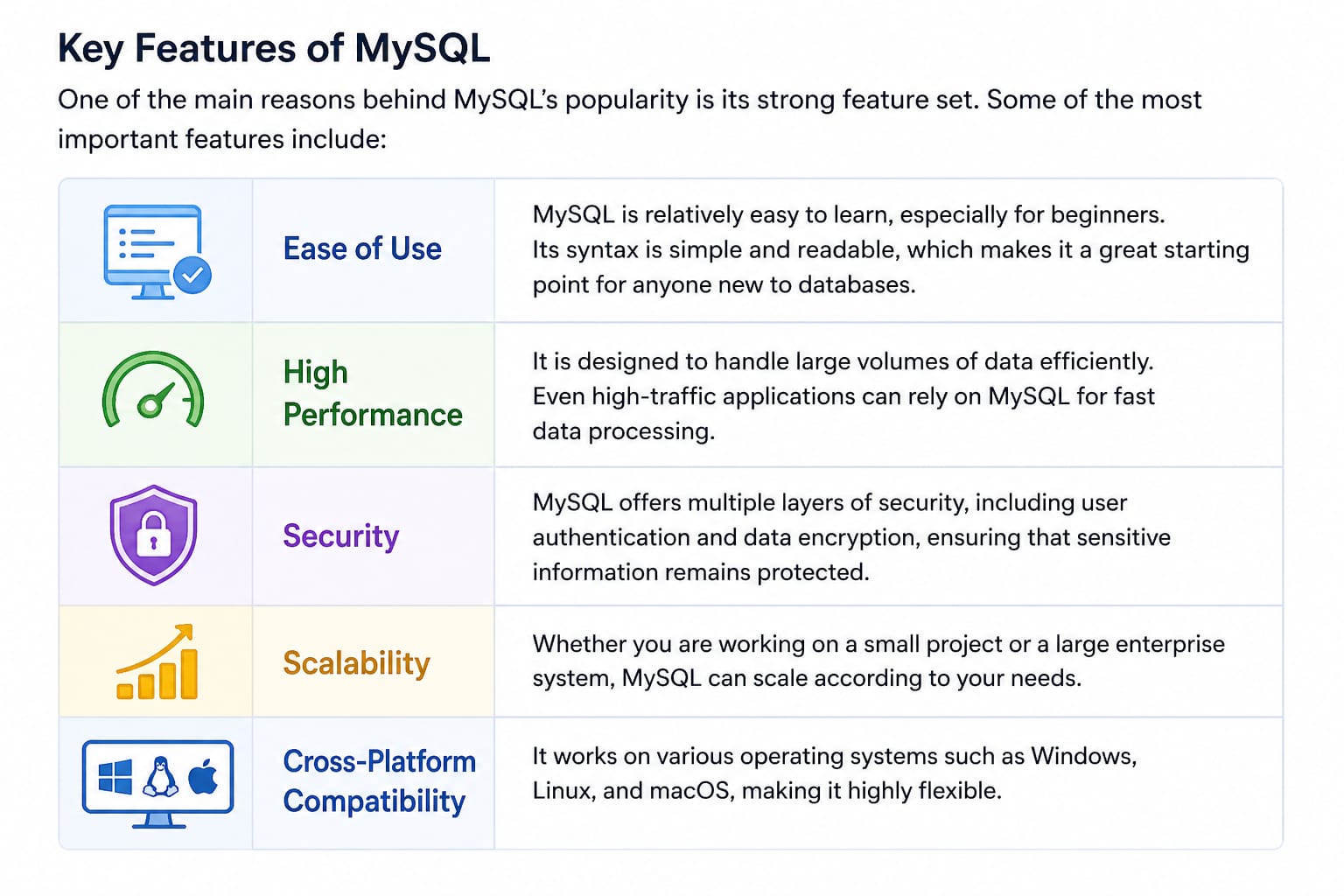
A lot of people like MySQL because it is easy to use and it works well. That is why MySQL is a choice for people who make software and for organizations all, around the world. They like to use MySQL to store their information.
Understanding How MySQL Works
MySQL has a way of working. It is like a conversation between two people.
There are two parts to MySQL:
- The client, where people or other programs ask for things they want to know
- The server, which does the work and gives the answers back to the client
Let me give you an example. When you look for something to buy on a website the website asks the MySQL server for help. The MySQL server looks fast through all the information it has and gives the website the answers it needs. The MySQL server does all this work in a short time which is nice. The MySQL server is really good, at helping the client get what it needs from the database.
Real-World Applications of MySQL
MySQL is used in a lot of situations. Some common things that use MySQL include:
- Website development (blogs, e-commerce platforms, CMS like WordPress)
- Mobile and web applications
- Banking and financial systems
- Customer relationship management (CRM) systems
- Data analytics and reporting tools
A lot of companies use MySQL to manage their data. Many companies rely on MySQL to do this job. MySQL is very important, for these companies because they use MySQL to manage their data. MySQL helps these companies to manage their data.
Difference Between MySQL and SQL
- Many people get confused between MySQL and SQL when they start learning.
- SQL is a way to talk to databases. You use it to write queries and do things with data.
- MySQL is the program that uses SQL to handle databases.
- Think of it like this: SQL is like a language and MySQL is, like a computer that understands and uses that language.
Why Learning MySQL is Important
Learning MySQL can really help you in your career. It is a skill for jobs like:
- Web Developer
- Backend Developer
- Data Analyst
- Database Administrator
Many businesses are using data to make decisions. So they need people with database skills. MySQL is often one of the things people learn when they start working with data.
The demand for MySQL skills is still growing. MySQL is a tool, in the tech industry.
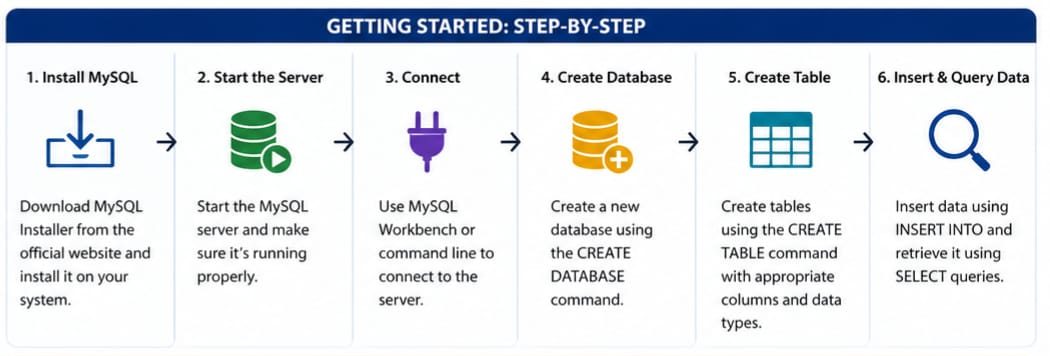
Getting Started with MySQL
Frequently Asked Questions (FAQs)
1. What is MySQL and why is it widely used?
MySQL is an open-source relational database management system (RDBMS) that helps store, organize, and manage data efficiently. It is widely used because of its speed, reliability, scalability, and compatibility with modern web applications.
2. What are the key benefits of using MySQL?
MySQL offers high performance, strong security, easy scalability, cross-platform support, and cost-effectiveness. It is suitable for startups, enterprises, and developers building data-driven applications.
3. Is MySQL suitable for beginners?
Yes. MySQL is one of the easiest databases to learn and is often the first database technology taught in software development, data analytics, and web development courses.
4. How does MySQL support modern businesses?
MySQL helps businesses manage large volumes of data, improve application performance, ensure data security, and support real-time decision-making through efficient data storage and retrieval.
5. What is the difference between MySQL and SQL?
SQL (Structured Query Language) is the language used to interact with databases, while MySQL is a database management system that uses SQL to create, manage, and query databases.
6. What career opportunities are available after learning MySQL?
MySQL skills can lead to roles such as Database Administrator (DBA), SQL Developer, Data Analyst, Backend Developer, Data Engineer, and Software Developer. It is a valuable skill across many IT and business domains.
Conclusion
MySQL is really important for applications and systems. It is a good tool that people use because it is reliable and works well. A lot of developers and organizations like MySQL because it is easy to use.
If you are new to technology or you want to learn more MySQL is a thing to learn. You will be happy you learned it. When you know how MySQL works and you have used it a lot you will be good at managing databases. This means you can get a job and have many choices, for your career. Learning MySQL is an idea because it helps you with database management and you can do a lot of things with it. MySQL is used by people and it is a good skill to have.





 Whatsapp us
 Call us
 Enquire Now