According to Grras Solutions, the industry demand for data professionals continues to rise rapidly as businesses increasingly adopt AI-powered solutions and advanced analytics. Their Data Science and Machine Learning (ML) Certification Training Course focuses on practical learning, live projects, and industry-relevant skills that help learners become job-ready professionals. )
In the world we live in today data is very important for businesses. Every kind of business from healthcare to finance and from shopping to cybersecurity uses data to make good decisions make customers happy and come up with new ideas.
Because businesses need data much they are looking for people who are good at working with data and machines that can learn. These people can look at data build systems and solve problems that businesses have.
If you want a job in technology that will be good for a time you should think about Data Science and Machine Learning (ML) These are areas to work in.
Grras Solutions says that more and more businesses want people who’re good with data. This is because businesses are starting to use machines that can think and learn and advanced ways of looking at data. Grras Solutions has a Data Science Certification Training Course that teaches people the skills they need to get a job. This course is practical, with projects and it helps people learn what they need to know to work in the industry. You can find out more at grras.com.
What is Data Science?
Data Science is a field that uses different areas of study to work together. Data Science combines
- Statistics
- Mathematics
- Programming
- Machine Learning
- Data Analysis
- Artificial Intelligence
The main parts of Data Science are
1. Data Collection: We get data from many places like
- Websites
- Mobile applications
- Sensors
- Databases
- APIs
- media platforms
We need to get this data from all these places to do Data Science.
2. Data Cleaning: We make sure the data is good to use by getting rid of
- Duplicate values
- Missing data
- Errors
- Inconsistencies
This step is important, for Data Science because we need data to work with.
3. Data Analysis: We look at the data. Use statistical methods and visualization tools to understand the data. This is a part of Data Science.
4. Machine Learning: We use algorithms to build models that can predict things and make intelligent systems. Machine Learning is a part of Data Science.
5. Data Visualization: We show what we found out using charts and reports and dashboards. This helps people understand the data and Data Science results.
What is Machine Learning?
Machine Learning is a part of Artificial Intelligence that helps systems figure out things from data on their own. They do not need to be told what to do. Machine Learning methods get better with time and practice.
They use what happened in the past to improve.
For example:
- Netflix suggests movies you might like based on what you watched
- Amazon tells you about products you might want to buy based on what you bought
- Google Maps tries to guess what the traffic will be, like.
- Banks use it to find transactions that’re not legitimate.
All these things are made possible by Machine Learning.
Types of Machine Learning
1. Supervised Learning: In supervised learning, models are trained using labeled datasets.
Examples:
- Email spam detection
- House price prediction
- Student performance analysis
Common Algorithms:
- Linear Regression
- Logistic Regression
- Decision Trees
- Random Forest
- Support Vector Machine (SVM)
2. Unsupervised Learning: In unsupervised learning, models identify patterns from unlabeled data.
Examples:
- Customer segmentation
- Market basket analysis
- Recommendation systems
- Common Algorithms:
- K-Means Clustering
- Hierarchical Clustering
- PCA (Principal Component Analysis)
3. Reinforcement Learning: In reinforcement learning, systems learn through rewards and penalties.
Applications:
- Robotics
- Self-driving cars
- Gaming AI
- Automated trading systems
Why Data Science and Machine Learning are Important
1. Making Good Choices: Companies use data to make quicker decisions. This is really important for companies because it helps them do things right. Data analytics is a part of this.
2. Getting Bigger: When businesses look at data they can see how to work and make more money. Data helps them find ways to do things faster and cheaper. This is what we mean by business growth. Business growth is when companies get bigger and make money.
3. Doing Things Automatically: Machine Learning can do tasks over and over without people having to do them. This saves people a lot of time and effort. Machine Learning is really good at automating things.
4. Making Things Just Right For You: Places like Netflix and Spotify and YouTube use Machine Learning to suggest things you might like. They look at what you have watched or listened to before. Then they suggest more things, like that. This is called an user experience. It is like they know you.
5. Staying Safe: Banks and other financial places use Machine Learning to find people who are trying to steal money. They also use it to stop cyber threats. This is called fraud detection and security. It helps keep people safe. Financial institutions use Machine Learning to do this.
Essential Skills Required for Data Science and Machine Learning
To become a successful Data Scientist or Machine Learning Engineer, learners need both technical and analytical skills.
Technical Skills
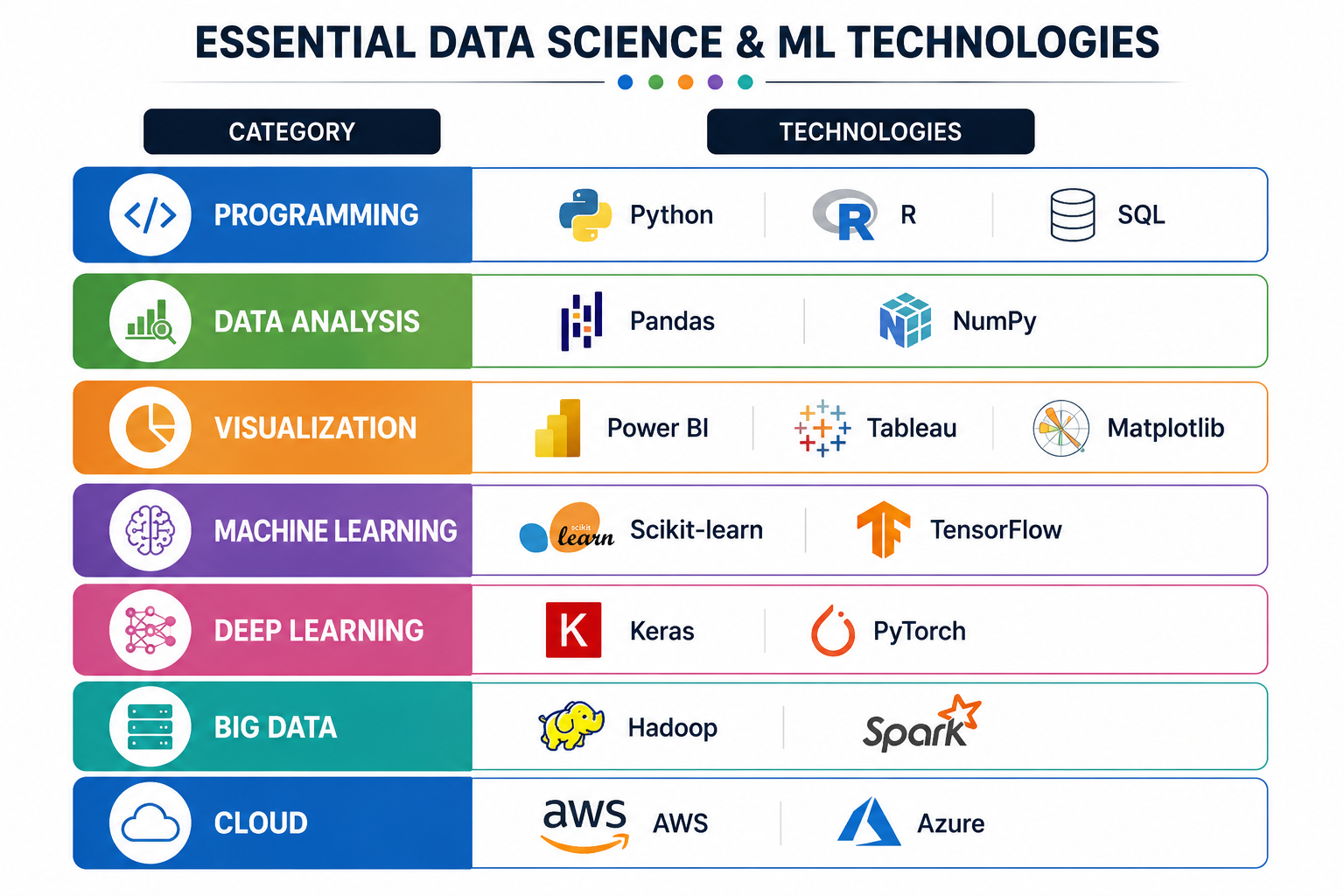
- Programming Languages
- Python
- R
- SQL
- Data Visualization Tools
- Power BI
- Tableau
- Matplotlib
- Seaborn
- Machine Learning Libraries
- Scikit-learn
- TensorFlow
- Keras
- PyTorch
- Big Data Technologies
- Hadoop
- Spark
- Cloud Platforms
- AWS
- Azure
- Google Cloud
- Soft Skills
- Problem-solving
- Critical thinking
- Communication skills
- Business understanding
- Analytical mindset
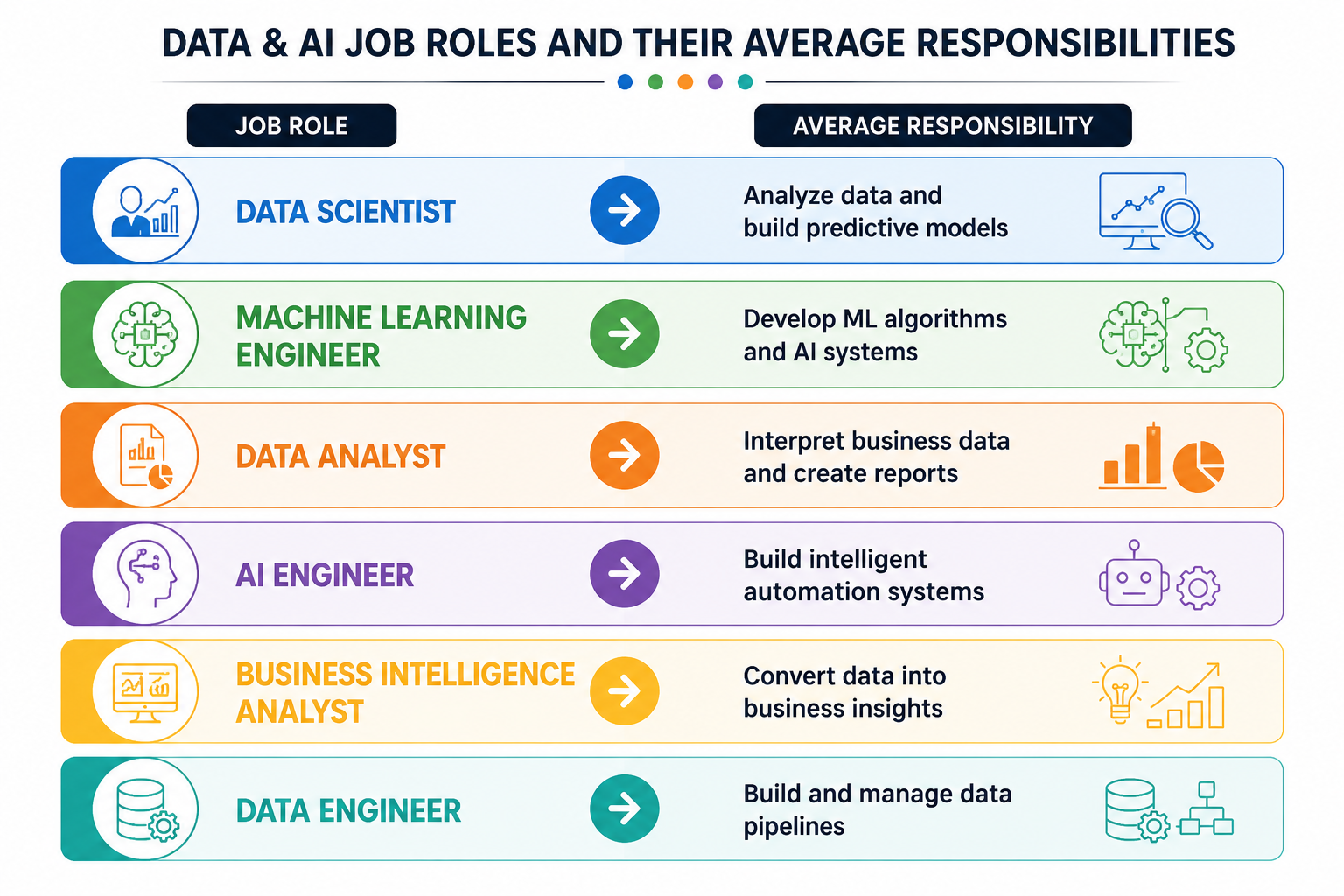
Career Opportunities in Data Science and ML:
The demand for skilled professionals in Data Science and Machine Learning is growing rapidly.
Popular Job Roles
Industries Using Data Science and Machine Learning
Data Science and ML are transforming almost every industry.
- Healthcare
- Disease prediction
- Medical image analysis
- Drug discovery
- Finance
- Fraud detection
- Credit scoring
- Risk analysis
- E-Commerce
- Product recommendations
- Customer analytics
- Dynamic pricing
- Cybersecurity
- Threat detection
- Network monitoring
- Security automation
- Education
- Personalized learning
- Student performance analysis
- AI-based tutoring systems
Why Learn Data Science from Grras Solutions?
Grras Solutions is a known name in India when it comes to IT training. They teach people the skills they need to get a job in the technical field. The Data Science Certification Training Course at Grras Solutions is really good because it gives students a lot of practice and hands on experience. They get to work on projects and get help from experts in the field. Grras Solutions also helps students find a job after they finish the course. You can visit their website at grras.com to learn more about the Data Science Certification Training Course, at Grras Solutions. (grras.com)
Key Highlights of the Training Program
Industry-Focused Curriculum
The course is designed as per what industries need today and the technology they use.
Practical Learning:
- Students work on real-world data
- projects
- Case studies
- Assignments, from industries
They get to do all this to learn by doing.
Expert Trainers:
Learners are guided by professionals who are certified by industries.
Grras Solutions helps students find jobs by guiding them on interviews building resumes and supporting placements.
Flexible Learning Modes:
- Students can learn online
- In a classroom
- They can join on weekends
- Fast-track programs
According to Grras Solutions their Data Science Certification Training Course gives students a lot of experience and hands-on learning. This prepares them for what they will face in industries. (grras.com)
Tools and Technologies Covered in Data Science Training
Modern Data Science training generally includes exposure to the following technologies:
Real-World Applications of Machine Learning
Recommendation Systems
Used by:
- Netflix
- Amazon
- Spotify
- YouTube
Virtual Assistants
Examples:
- ChatGPT
- Alexa
- Siri
- Google Assistant
Self-Driving Cars: AI and Machine Learning help cars drive on their own by understanding traffic, objects and road conditions.
Healthcare Diagnostics: Machine Learning helps doctors find diseases by looking at images and patient information.
Future of Data Science and Machine Learning
The future of Data Science and Machine Learning looks very good.
Experts think Data Science and Machine Learning will grow a lot in areas like:
- Artificial Intelligence
- Automation
- Predictive Analytics
- Cloud Computing
- Big Data Technologies
Companies over the world are spending a lot of money on AI solutions. This is creating good job opportunities, for skilled professionals.
Data Science and Machine Learning jobs will keep growing as more industries use AI. This means data science professionals can have an successful career.
Visit grras.com for information.(grras.com)
Tips for Beginners Starting in Data Science
Start with Python. Python is a language for people who are just starting out and it is used a lot in Data Science.
You should also learn Statistics and Mathematics because these things will help you understand how Machine Learning algorithms work.
Try working on projects. This will help you learn by doing things. It will make you more confident in what you can do.
Make a portfolio for yourself. You can make projects on GitHub. Show people what you can do.
Keep learning things. The AI and Data Science field is changing all the time so you need to stay up, to date with Python and Data Science and all that.
FAQs About Data Science & Machine Learning
1. What is the difference between Data Science and Machine Learning?
Data Science is about collecting, analyzing and interpreting data to solve business problems. Machine Learning is a part of Data Science. It helps systems learn from data. Get better on their own. You do not need to program them step by step.
2. Why are Data Science and Machine Learning important for careers?
Companies are using data and AI to make better choices. They also use it to do things and make customers happier. This means they need people who’re good at Data Science and Machine Learning. These skills are in demand.
3. Which skills are required to start a career in Data Science and Machine Learning?
To start you should learn Python. You should also learn statistics, SQL and how to show data in a way. Basic Machine Learning concepts are important too. You need to think and solve problems well.
4. What job roles are available after learning Data Science and Machine Learning?
You can be a Data Scientist, Machine Learning Engineer or Data Analyst. Other options are AI Engineer, Business Intelligence Analyst and Data Engineer. These jobs are needed in industries. These include healthcare, finance, e-commerce and cybersecurity.
5. Is Data Science and Machine Learning a career choice in 2026?
Data Science and Machine Learning are growing fast. Many industries are using AI, automation and predictive analytics. This means these careers will be in demand. They are choices for your career.
6. How can beginners start learning Data Science and Machine Learning?
Start with Python programming. Learn statistics. Work on projects. Practice, with real-world data. Join a training program. Get an internship to build your skills.
Conclusion
Data Science and Machine Learning are changing the way businesses operate and make decisions. As organizations keep using AI-driven technologies the demand for skilled professionals who know Data Science and Machine Learning will only get bigger.
If you are a student or a working professional or someone who loves technology learning Data Science and Machine Learning can give you a lot of career opportunities in many different industries.
A training program that is practical and focused on the industry like the Data Science Certification Training Course that Grras Solutions offers can help people learn Data Science and Machine Learning by building a foundation getting hands-on experience and getting ready for real-world challenges. You can visit their website at grras.com.
The future is for professionals who can take data and turn it into decisions. And this is a great time to start learning Data Science and Machine Learning. Data Science and Machine Learning are the key, to success. Now is the perfect time to begin your journey into Data Science and Machine Learning.




 Whatsapp us
 Call us
 Enquire Now