It’s not like you joined this world just to be another statistic. You joined this world because you wanted to create something meaningful, solve something difficult, and take home what you’re really worth. And so allow me to pose a question: Are your skills taking you to where you need to be, or are they silently stopping you before you get there?
Because in 2026, the engineers who get picked for the job, the engineers who get promoted, the engineers who leave us wondering “How’d they get here so fast?” – they’ve all got one thing in common. They learned early on that their success depended not just on what they knew – but on having mastered AI Skills for Cloud and DevOps Engineers. If you’re that engineer, read on…
The Industry Changed. Did Your Skillset?
The discussion within engineering groups around what matters in the skillsets of software development professionals seems to go unsaid, but everyone understands the underlying message. The person who was once the most valuable developer due to their mastery of such technologies as Kubernetes and Terraform has started losing relevance. This does not mean that the engineer’s technical expertise has become worthless; rather, another engineer has added AI in Cloud Computing to theirs.
Modern cloud computing platforms are much more than mere infrastructure services since companies need intelligent monitoring tools, automation solutions, predictive analytics capabilities, and other intelligent features within their IT infrastructure environments. Engineers are expected to possess an amalgam of skills that enables them to handle intelligent, advanced infrastructure and cloud platforms.
Here are the competencies companies will be actively seeking in cloud and DevOps engineers in 2026:
- Proficiency with AI-enabled cloud infrastructure
- Work with intelligent monitoring systems
- Automation of deployment processes
- Predictive analytics in the field of infrastructure
- Integration of AI services in the cloud
- Management of AI-based environments
What AI in DevOps Actually Means in the Real World
Don’t bother listening to conference talks. Instead, let’s consider how AI in DevOps works in practice. It means having not only a deployment pipeline but also one that learns from previous experiences to determine the right strategy for deploying code. In addition, it means having an ability to predict an incident 40 minutes ahead of time and specify exactly what service will be responsible for this downtime.
In turn, it means having a person who used to take 3 hours for troubleshooting an incident and now takes merely 20 minutes because an AI solution managed to correlate the logs and offer a diagnosis with possible solutions way before the engineer could do anything. AI-powered operations solutions, such as Moogsoft, Dynatrace, and BigPanda, collect data coming from numerous infrastructure components, suppress noise, detect what’s essential, and in many cases solve incidents automatically.
Now, with GitHub Copilot, you can have whole Terraform scripts written for you based on your comments and understanding of what needs to be done. Engineers who have been working for a few years are able to do things that were completely impossible just two years back. And all this is real AI in DevOps.
The Skills That Are Making Engineers Irreplaceable Right Now
It’s time to get concrete — because learn AI is so generic that you might as well say nothing at all. There are concrete AI skill sets that are essential for DevOps engineers in order to land well-paid positions. Top-paid engineers do not have maximum knowledge in AI; what matters is whether an engineer has knowledge that’s valuable enough to show how skilled he or she is through practical solutions to business problems.
Important AI skills for engineers to develop:
- MLOps Basics – Deployment and monitoring ML models in the cloud environment
- LLMOps – Application management of large language models
- Intelligent Observability – Intelligent Monitoring Systems
- DevSecOps and AI – AI-powered scanning within CI/CD pipeline
- Prompt Engineering – Prompt writing for automation and troubleshooting
- Cloud AI Integration – Azure AI, AWS SageMaker, Vertex AI
Developing only three or four out of those skills will put you way ahead of other applicants in your search for a job related to Cloud/AI engineering. Successful top-paid engineers from Cloud and AI Careers mastered both infrastructure and AI skills.
How AI and Automation Are Building the Engineers of Tomorrow
What is missed amid all the fear of automation taking over jobs — Automation and AI are leading to some of the coolest engineering jobs that the industry has ever seen. It is not about those that asked the question, “Will AI replace my job,” but rather about those that asked, “How can I be better than others at AI?”
The growth of engineers that embraced AI and Automation is faster compared to the classic DevOps engineer’s growth. Jobs such as ML Engineer, AI Platform Engineer, LLMOps Specialist, and Cloud AI Architect are being done by people who studied cloud, automation, and AI simultaneously rather than separately.
The new career path of engineering with each step includes knowledge in cloud technology basics, automation principles, and how to use AI successfully. It does not matter if an engineer earns ₹20 LPA to ₹40 LPA right now — the person is one of the best due to learning the technologies that modern companies need.
Generative AI in DevOps — The Shift Nobody Fully Prepared For
At the time when Generative Ai in DevOps emerged, many engineers assumed that it would be yet another passing fad. However, their assumptions soon changed as Generative Ai started performing its duties in documenting, resolving incidents, configuring infrastructure, and deploying software at an unparalleled rate.
The following are some of the major impacts of Generative Ai in DevOps:
- More Efficient Incident Response – AI systems examine logs for probable incidents quickly.
- Automated Documentation – Generative Ai documents runbooks and operational reports on its own.
- Code Reviews by AI – AI systems detect security flaws faster than human developers.
- Deployment by AI – Faster infrastructure deployment and automation.
- Troubleshooting by AI – Fixes are offered by AI systems based on previous experiences.
Engineers who understand how to use these systems turn lengthy operations into efficient AI-powered processes. This is the true impact of Generative Ai in DevOps that is currently being made around the world.
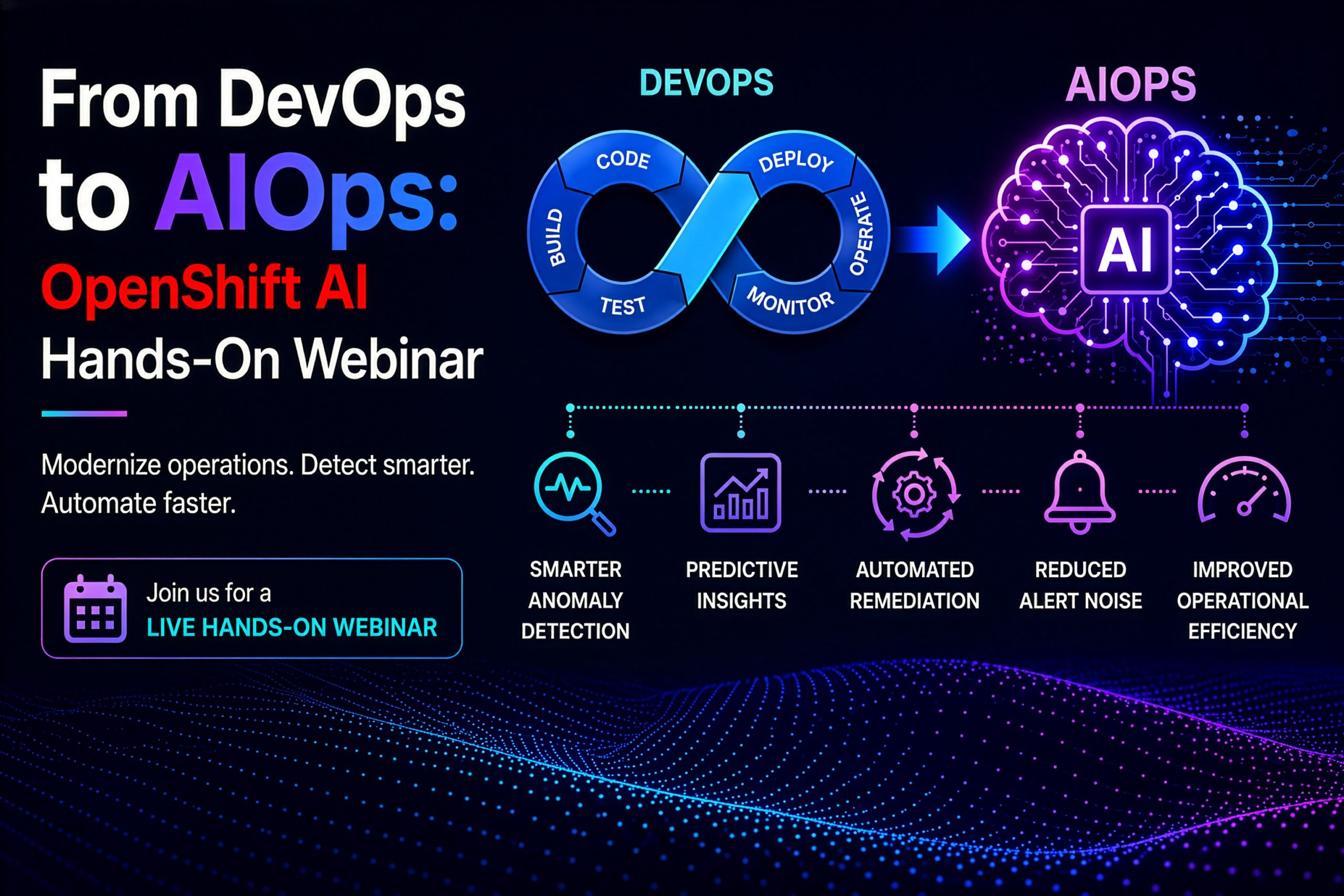
AI DevOps Tools Every Engineer Must Know in 2026
There have been significant changes in the ecosystem of AI DevOps tools over the past two years as organizations are now spending considerable amounts on building intelligent operational systems to automate processes such as monitoring, optimization, infrastructure analysis, and cloud operations. Engineers skilled in these technologies are getting more sought-after since companies need smart and scalable solutions for their infrastructure.
Some common DevOps AI tools used by engineering teams today include:
- GitHub Copilot for code and infrastructure automation
- Datadog AI for monitoring and observability
- Harness AI for deployment optimization
- PagerDuty AI for incident management
- Platforms for Kubernetes automation
- Automated security monitoring systems
- Smart cloud analytics and log analysis tools
Developing practical expertise in the above-mentioned platforms is perhaps one of the most valuable skills an engineer could develop currently since organizations no longer require just cloud-skilled engineers but also engineers with the ability to integrate AI and automation into their infrastructure.
Best AI Skills for Cloud Engineers in 2026
However, the list of best AI skills for cloud engineers goes beyond coding and machine learning knowledge only. Nowadays, employers tend to look for specialists who are able to work with cloud infrastructures and use intelligent automation techniques in combination with each other. People with such knowledge are increasingly demanded in today’s IT industry.
Cloud engineers will also benefit from knowing how AI helps achieve better scalability, improve security of the infrastructure, manage resources efficiently, and perform operations quickly. Specialists who are experienced enough to control intelligent cloud infrastructures are extremely needed in the modern market of IT infrastructure management.
Yet another strong advantage to get for a future career lies in an engineer’s ability to think operationally using AI capabilities. The ability to define ways for implementing intelligent automation techniques in order to make processes more efficient is one of the most useful skills for the modern engineer.
How AI Is Changing DevOps Careers — The Opportunity Is Massive
It’s not an abstract discussion anymore on the impact that how AI is changing DevOps careers. New jobs are being formed faster than there are talented engineers available to join these positions. ML Engineer, AI Platform Engineer, Cloud AI Architect, and LLMOps Engineer are among the most well-paid tech jobs available today in India and around the world.
The opportunities are huge at this point because the number of engineers available in the field remains very low. Companies require engineers familiar with the concepts of AI-enabled infrastructural systems, intelligent automation, cloud optimization, and scalability of operations – but engineers who meet these requirements remain few compared to their number of needs.
Engineers starting out with the study of AI today will put themselves ahead of their competitors by several years. The fastest-hired engineers will be the ones with proven AI Skills for Cloud and DevOps Engineers.
Your 6-Month AI Skills Roadmap — Build This and Get Hired
The biggest mistake made by cloud and DevOps engineers is trying to learn absolutely everything at once. Using a structured roadmap is much more effective compared to taking some random tutorials because, when hiring, companies pay special attention to practical implementation and deep understanding of theoretical material.
Some important components that should be included into the roadmap are:
- Months 1–2 – Python programming fundamentals, AI basics, cloud automation basics
- Months 3–4 – Azure AI or AWS AI services with real-world projects
- Months 5–6 – MLOps, AIOps, LLMOps certification and projects
Following the proposed roadmap strictly, in just six months you will have an extensive profile that will put you above most other candidates looking for jobs as a cloud engineer or DevOps specialist. As AI skills required for DevOps engineers and cloud engineers, they can only be acquired through structured learning, hands-on application, and constantly improving projects. Those who persist throughout this process of gaining experience will become the most competitive candidates in interviews and hiring sessions. The ability to use AI in cloud computing becomes an essential tool for modern engineers.
Where Your AI and Cloud Career Transformation Begins — Grras Solutions
All that we have talked about here in this blog is a manifestation of the direction in which our industry is headed. Grras Solutions offers training in accordance with the current requirements of the IT industry rather than obsolete theoretical concepts. Practice, implementation of solutions in a cloud environment, the integration of AI, and practical industry knowledge are at the forefront of our training approach.
Our trainees start solving problems on day one by working on real cloud environments, real deployments, and automation systems that are used today in companies. Experienced practitioners show our learners not just how the technology works, but also its implementation in a production environment on a daily basis.
With our career services including placement opportunities, practical project work, interview practice, industry-relevant certifications, and mentoring from industry experts, Grras will help you to acquire your dream job in the DevOps, Cloud and AI Careers.
The Bottom Line
Though the victors of 2026 might not necessarily be those who possess knowledge, they are likely to be the ones who were smart enough to acquire the necessary skill set well in advance. AI Skills for Cloud and DevOps Engineers have stopped being a luxury that you can acquire on the side to enhance your career and start becoming a requirement.
Engineers that integrate automation, infrastructure, and intelligence into cloud and DevOps will be the winners. It’s time to get started now and prepare yourself for the future through consistent project work.




 Whatsapp us
 Call us
 Enquire Now