In todays world Python is a valuable programming language to learn.
From startups in Jaipur to companies, in Bengaluru Python is used in almost every modern tech field now.
Python is used for lots of things.
Someone can use Python to build applications that use intelligence look at business data do tasks automatically or make web applications.
Python is an useful skill to learn.
For students people who are working people who want to change their career and even housewives who want to go to work Python is a great way to get into the tech industry.
It is easy to learn. Can help people get a good job.
Why Python Is So Popular
Python is a language to work with because it is easy to understand.
Unlike some programming languages that need complicated coding Python lets people write simple code that makes sense.
For example:
print(“Hello, World!”)
Some of the reasons why Python is so well liked are:
- Easy to learn and use
- People who use Python help each other
- Python works on types of computers
- Python has lots of tools and frameworks
- here are jobs available, for people who know Python
Because of all these good things Python has become a big part of the technology we use today. Python is really popular.
Python in Artificial Intelligence (AI)
Artificial Intelligence is changing how businesses, industries and daily applications work.
- You can see it in voice assistants like Alexa and Siri or in the recommendation systems on Netflix and Amazon.
- Artificial Intelligence is becoming a part of our life.
- Behind many of these systems is a programming language that rules the AI world. Python.
- Python is the choice for Artificial Intelligence because it is easy, strong, adaptable and has a huge ecosystem of AI libraries and frameworks.
For students, graduates, working professionals and those switching careers in Jaipur, Rajasthan and, over India learning Python for Artificial Intelligence can lead to some of the fastest-growing and highest-paying tech careers.
Why AI Developers Prefer Python
AI projects are about working with algorithms handling data and using machine learning models.
Python is really helpful here because it has libraries and tools that make these tasks easier.
Some popular libraries for AI are:
- TensorFlow
- PyTorch
- Keras
- Scikit-learn
With these AI tools developers can focus on building AI projects with Python and use libraries, like Scikit-learn for data processing.
Real-World AI Applications Using Python
Python is really important for lots of things we use every day that are controlled by intelligence.
These things include:
- Chatbots and virtual assistants
- Recommendation systems like the ones used by Netflix and Amazon
- recognition
- Self-driving cars
- Language translation systems
For example you can use Python to train machine learning models that can figure out what customers are likely to do or find fake transactions in banking systems that use Python. Python is used to make these machine learning models that can predict customer behavior or detect fraud, in banking systems that use Python.
Python in Data Science
Data is really important for the economy. Companies get a lot of Data every day. The Data Science field helps us understand what that Data means and make decisions based on the Data.
Python is a language that is used for Data Science. It has a lot of tools that help us work with the Data. For example we can use Python for things like
- Data analysis
- Data visualization
- Computing
- Modeling
This makes Python very useful for people who work with Data Science and Data. They like to use Python because it helps them work with the Data and get results from the Data. The people who work with Data Science and Data really like Python.
Essential Python Libraries for Data Science
Some of the most important libraries include:
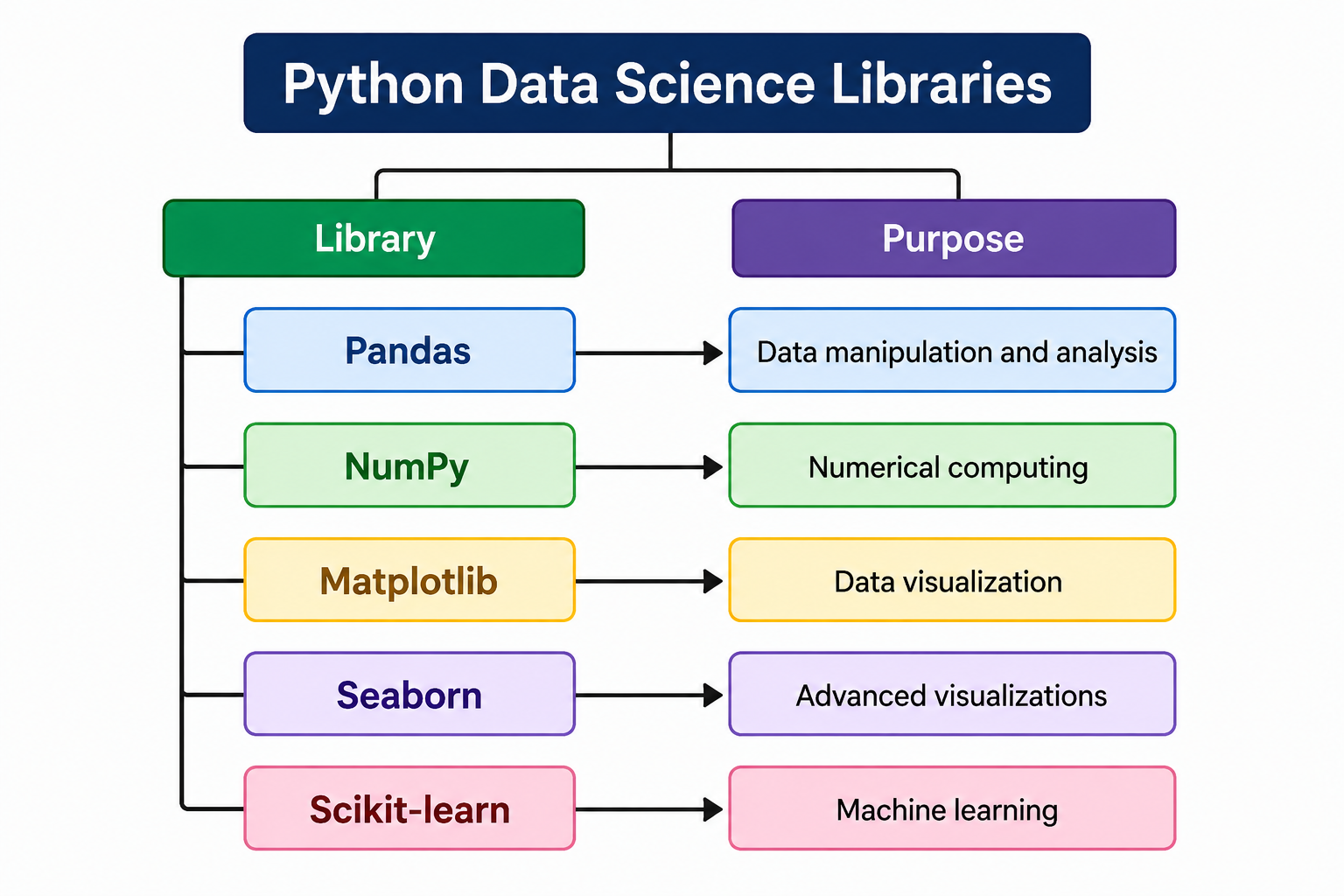
These libraries make it easier to clean, analyze, and visualize large datasets.
Career Opportunities in Data Science
Learning Python can help you pursue careers such as:
- Data Analyst
- Data Scientist
- Business Intelligence Analyst
- Machine Learning Engineer
- AI Researcher
As companies increasingly rely on data-driven decisions, the demand for Python-skilled professionals continues to grow.
Python in Automation
Automation is one area where Python really stands out.
Python scripts can automate tasks that usually take a lot of time.
These tasks normally take hours. Python makes them easier.
Automation using Python helps get things done quickly.
It is great, for doing tasks.
What Can Python Automate?
Python can automate:
- File management
- Email sending
- Web scraping
- Excel operations
- Data entry
- Social media posting
- System monitoring
For example, a Python script can automatically organize files into folders, generate reports, or extract information from websites.
Popular Automation Libraries
Some commonly used automation libraries include:
- Selenium (web automation)
- BeautifulSoup (web scraping)
- PyAutoGUI (desktop automation)
- OpenPyXL (Excel automation)
- Requests (API handling)
Businesses use Python automation to save time, reduce errors, and improve productivity.
Why Learning Python Is a Smart Career Move?
Python skills are highly valued across industries. Whether you want to become a software developer, AI engineer, or automation specialist, Python gives you a strong foundation.
Benefits of Learning Python
1. High Demand in the Job Market:
Python developers are in demand globally due to the rapid growth of AI, data science, and cloud technologies.
2. Beginner-Friendly:
Python is often recommended as the first programming language for students and beginners.
3. Versatile Applications:
One language can help you work in multiple domains, including:
- Web development
- AI and Machine Learning
- Data Analytics
- Cybersecurity
- Automation
- Game development
4. Strong Community Support
Python has millions of developers worldwide, making it easy to find tutorials, documentation, and open-source projects.
How to Start Learning Python
If you’re new to Python, here’s a simple roadmap:
Step 1: Learn the Basics
Start with:
- Variables
- Data types
- Loops
- Functions
- Conditional statements
Step 2: Practice Small Projects
Build beginner projects like:
- Calculator
- To-do app
- Weather app
- File organizer
Step 3: Choose a Specialization
Decide whether you want to focus on:
- AI and Machine Learning
- Data Science
- Automation
- Web Development
Step 4: Work on Real Projects
Hands-on experience is the best way to improve your skills and build a portfolio.
The Future of Python
Python is still the choice in the tech world. This is because Python is very easy to work with and it has a lot of tools that people can use.
As we get better, at making machines think and putting things on the internet Python becomes more important.
Lots of companies want to hire people who know how to use Python to fix problems and make new things with Python.
FAQs – How Python Opens Doors in AI, Data Science and Automation
1. Why is Python important for Artificial Intelligence, Data Science and Automation?
Python is really important for Artificial Intelligence, Data Science and Automation because it is easy to learn and it has lots of uses. Python is also very good because it has libraries that people use for Artificial Intelligence, Data Science and Automation projects. Python is a language for Artificial Intelligence, Data Science and Automation.
2. Can beginners learn Python for Artificial Intelligence and Data Science?
Yes. Python is a language for beginners to learn because it is easy to understand. This makes Python perfect for students, people who’re new to the field and people who do not have a technical background. Python is a choice for Artificial Intelligence and Data Science.
3. What career opportunities are available after learning Python?
After learning Python students can look for jobs such as:
- Python Developer
- Data Analyst
- Data Scientist
- Artificial Intelligence Engineer
- Automation Engineer
- Machine Learning Engineer. These are all careers that use Python.
4. Is Python in demand in India?
Yes. People who know Python are in demand in many industries in India including information technology, healthcare, banking, online shopping, cyber security and cloud computing. Python is very useful in India.
5. How long does it take to learn Python?
You can learn the basics of Python in a months if you practice regularly.. If you want to learn more advanced skills in Artificial Intelligence and Data Science it will take longer to learn Python. You need to keep practicing Python.
6. Can non-IT students build a career with Python?
Yes. Many students who do not have a background learn Python and get jobs, in Artificial Intelligence, Data Science and Automation. Python is a language for non-IT students to learn.
Conclusion
Python is really cool. It is not something you use to write code. Python is a way to get into some exciting areas of technology where you can earn a lot of money.
From making intelligence systems to looking at huge amounts of data and finding ways to automate boring tasks Python gives people who write code the power to come up with new ideas and create things that make a difference.
If you are a student or someone who likes technology and wants to learn Python can help you do things and have a successful career.
The best time to start learning Python is now.




 Whatsapp us
 Call us
 Enquire Now