Data is around us today. Companies use Data to understand their customers make their products better and grow their business. Because of this the demand for Data Analysts is increasing fast in India.
If you like working with numbers solving problems and finding information then Data Analytics can be a career for you. You will get to work with Data. Help companies make better decisions.
In this blog you will learn about:
What a Data Analyst does
Skills you need to become a Data Analyst
- Best tools to learn for Data Analytics
- Step-by-step roadmap to become a Data Analyst
- Salary of a Data Analyst in India
- Tips to get your job as a Data Analyst
What is a Data Analyst?
A Data Analyst collects, cleans and studies Data to help companies make decisions. For example an online shopping company checks which products sell the most. A bank studies customer spending habits. A hospital uses Data to improve care. A Data Analyst turns Data into insights.
Why Choose Data Analytics as a Career in India?
Data Analytics is one of the growing careers in India because many companies are becoming digital. Businesses need Data for decision-making. There is a demand for professionals. You can get salary packages and work in various industries.
Many industries are hiring Data Analysts, such as:
- IT Companies
- E-commerce
- Banking
- Healthcare
- Marketing
- Education
- Startups
Skills You Need to Become a Data Analyst
You do not need to be a genius in mathematics. Basic understanding and practice are enough. Here are the main skills you should learn:
1. Excel: Excel is the tool every beginner should learn. You should know formulas, pivot tables, charts and data cleaning. Excel is widely used in companies.
2. SQL: SQL is used to work with databases. With SQL you can get data from databases filter information. Create reports. Important SQL topics include SELECT, WHERE, GROUP BY, JOIN and ORDER BY. SQL is one of the skills for Data Analysts.
3. Python:: Python helps you analyze amounts of Data. Useful Python libraries include Pandas, NumPy, Matplotlib and Seaborn. Python makes your work faster and smarter.
4. Data Visualisation: Companies understand Data better through charts and dashboards. Popular tools include Power BI and Tableau. These tools help you create reports and dashboards.
5. Statistics Basics: Basic statistics help you understand Data correctly. Learn mean, median, mode, percentage and probability. You only need beginner-level statistics at the start.
Step-by-Step Roadmap to Become a Data Analyst in India
Step 1: Learn the Basics
Start with Excel, SQL and basic statistics. Spend 1-2 months practicing.
Step 2: Learn Python and Visualization Tools
After basics learn Python and Power BI or Tableau. Build projects while learning.
Step 3: Work on Real Projects
Projects are very important. Examples include sales dashboard, customer analysis, Netflix Data Analysis and IPL Data Analysis. Projects help you gain confidence.
Step 4: Create a Portfolio
Upload your projects on GitHub or LinkedIn. A portfolio helps recruiters see your skills.
Step 5: Apply for Internships and Jobs
Start applying for internships, fresher jobs and remote opportunities. Use platforms like LinkedIn, Naukri Indeed and Internshala.
Do You Need a Degree?
A degree is helpful but not always necessary. Many people become Data Analysts from backgrounds like B.Com, BBA, Engineering, BA, BSc and MBA. Skills matter more than your degree.
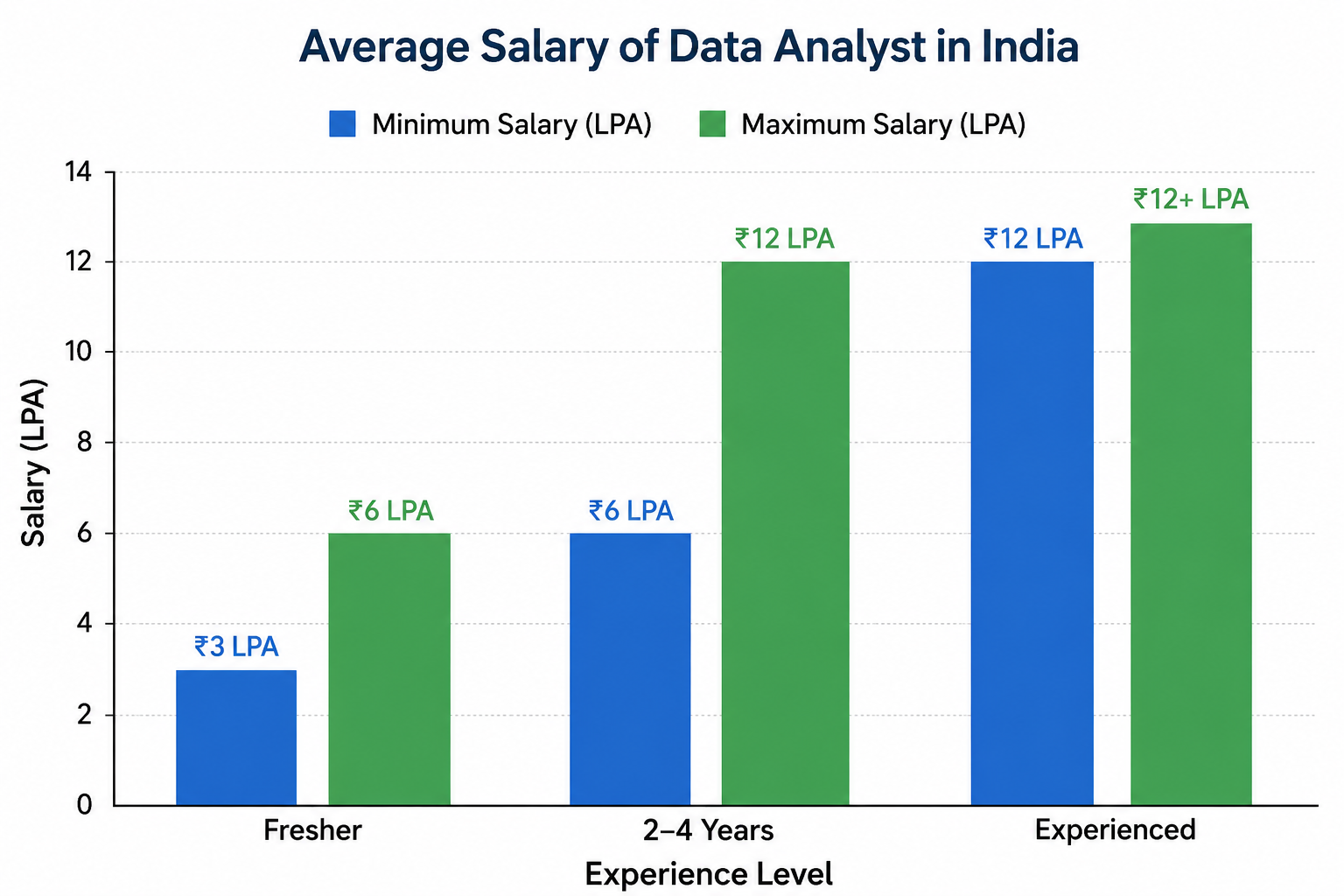
Salary of a Data Analyst in India
Salary depends on skills, location and company. Top companies may offer packages. Practice daily for results.
Tips to Get Your First Data Analyst Job
- Build projects to show knowledge.
- Improve your communication skills because a Data Analyst must explain insights clearly.
- Practice SQL and Excel daily because these are asked in interviews.
- Keep learning because technology changes quickly.
Common Mistakes Beginners Make
- Learning tools at once
- Watching tutorials without practice
- Not building projects
- Ignoring SQL
- Giving up early
Stay patient and consistent.
Becoming a Data Analyst in India
Becoming a Data Analyst in India is possible for anyone who’s ready to learn and practice consistently. You do not need to know everything from day one. Start small, build skills step by step, and work on projects. Focus on Excel, SQL, Python, Power BI or Tableau and projects. With dedication and regular practice you can build a career in Data Analytics. Start today; stay consistent. Keep improving.
FAQs About How to Become a Data Analyst in India
1. What qualifications are required to become a data analyst in India?
Most companies prefer candidates with a bachelor’s degree in fields like Computer Science, Statistics, Mathematics, Business Analytics or Engineering. However strong analytical skills, practical projects and knowledge of tools like Excel, SQL, Python and Power BI are equally important.
2. Which skills are important for a data analyst career?
A successful data analyst should understand data visualization, SQL, Excel, statistics, data cleaning and reporting tools such as Power BI or Tableau. Basic programming knowledge in Python or R can also improve job opportunities.
3. Is data analytics a career option in India?
Yes data analytics is one of the growing career fields in India. Industries like healthcare, finance, e-commerce, marketing and IT actively hire data analysts to make data-driven business decisions.
4. How long does it take to become a data analyst?
The learning period depends on your background and dedication. Beginners can usually gain job- skills within 4 to 12 months through structured learning, certifications and hands-on practice.
5. Can a fresher become a data analyst in India?
Yes freshers can start a career in data analytics by learning industry- tools completing practical projects and building a strong portfolio. Many companies hire entry-level analysts based on skills and internships.
6. What is the average salary of a data analyst in India?
Entry-level data analysts in India can earn around ₹3 LPA to ₹6 LPA. With experience and advanced skills salaries can increase depending on the company, industry and expertise.
Conclusion
Becoming a Data Analyst in India is possible for anyone who’s ready to learn and practice consistently. You do not need to know everything from day one. Start small build skills step by step and work on projects.
Focus on:
- Excel
- SQL
- Python
- Power BI/Tableau
- Projects
With dedication and regular practice you can build a career, in Data Analytics. Start today stay consistent. Keep improving.





 Whatsapp us
 Call us
 Enquire Now