Cloud computing has fundamentally transformed how businesses operate in the digital era. Organizations no longer need to invest heavily in physical infrastructure to run applications or store data. Instead, they can leverage cloud platforms to access computing resources on demand. Among the various cloud providers available today, Amazon Web Services (AWS) stands out as the most widely adopted and comprehensive solution.
This guide explores AWS cloud computing in depth, covering its fundamentals, services, benefits, and career opportunities for aspiring professionals.
1. Understanding Cloud Computing:
Cloud computing refers to the delivery of computing services—including servers, storage, databases, networking, software, and analytics—over the internet. These services are available on a pay-as-you-go basis, allowing businesses to scale resources according to their needs.
Traditionally, companies had to purchase and maintain physical servers, which required significant upfront investment and ongoing maintenance. Cloud computing eliminates these limitations by offering flexible, scalable, and cost-effective solutions.
The key characteristics of cloud computing include:
- On-demand self-service
- Broad network access
- Resource pooling
- Rapid elasticity
- Measured service
2. What is AWS (Amazon Web Services)?
Amazon Web Services (AWS) is a cloud computing platform launched by Amazon in 2006. It provides a wide range of cloud services that enable businesses to build and deploy applications with greater efficiency and flexibility.
AWS operates through a global network of data centers spread across multiple regions and availability zones. This infrastructure ensures high availability, fault tolerance, and low latency for applications deployed on the platform.
Today, AWS offers more than 200 fully featured services, covering areas such as computing, storage, networking, databases, analytics, artificial intelligence, and security.
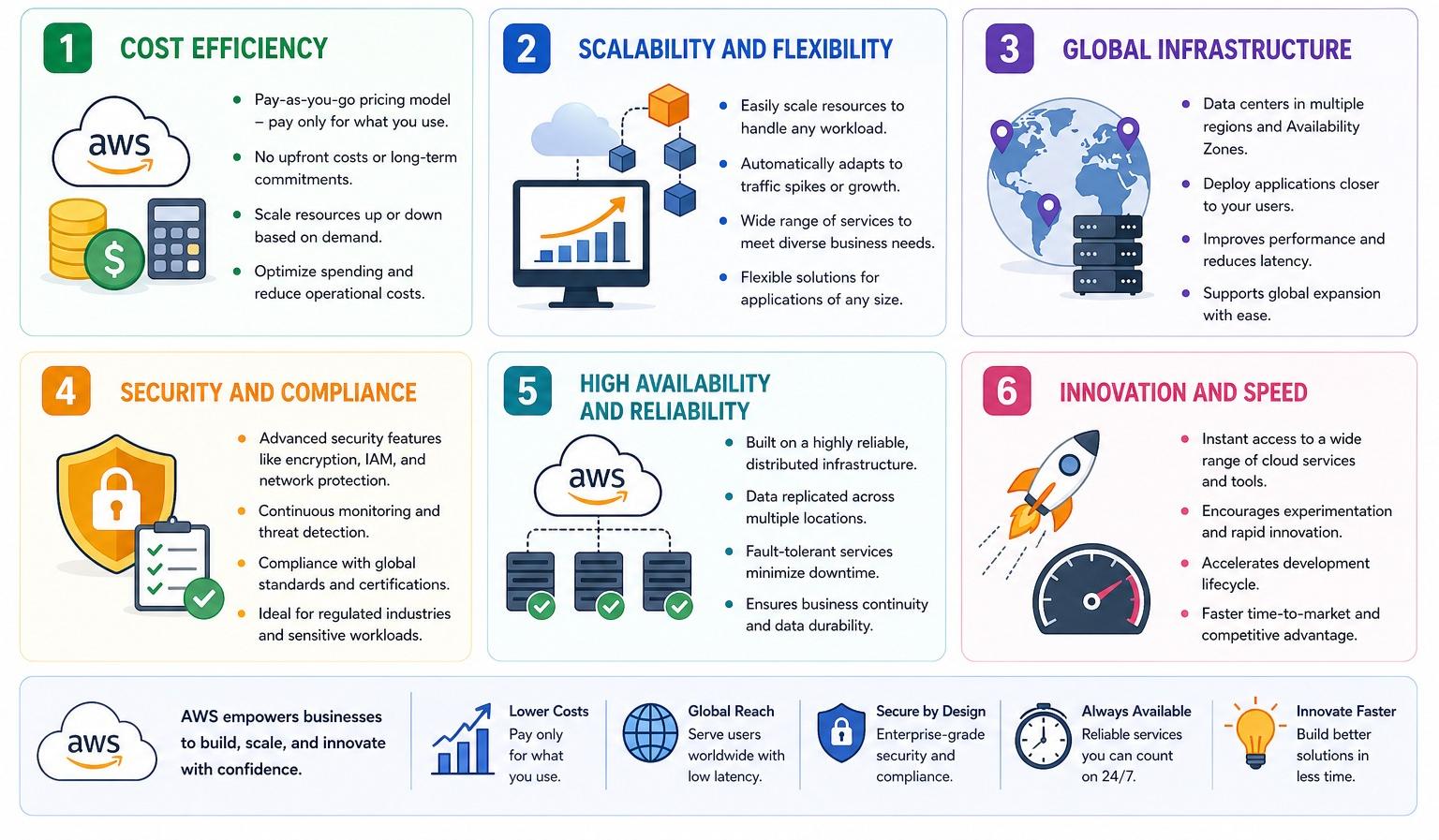
3.Key Advantages of AWS Cloud Computing:
4. Core AWS Service:
AWS offers a broad set of services categorized into different domains. Understanding these core services is essential for anyone learning cloud computing.
Computer services: Compute services provide the processing power required to run applications.
- Amazon EC2 (Elastic Compute Cloud): Virtual servers that can be configured and scaled as needed.
- AWS Lambda: A serverless computing service that allows developers to run code without managing servers.
- AWS Elastic Beanstalk: A platform for deploying and managing applications without handling infrastructure.
5.Storage Services
Storage services help in storing and managing data efficiently.
- Amazon S3 (Simple Storage Service): Object storage for storing and retrieving large amounts of data.
- Amazon EBS (Elastic Block Store): Block storage for use with EC2 instances.
- Amazon Glacier: Low-cost storage for archival data.
6.Database Services
AWS provides managed database solutions for various use cases.
- Amazon RDS (Relational Database Service): Managed relational databases such as MySQL, PostgreSQL, and Oracle.
- Amazon DynamoDB: A fully managed NoSQL database for high-performance applications.
7.Networking Services
Networking services enable secure and scalable communication.
- Amazon VPC (Virtual Private Cloud): A private network within AWS for secure resource management.
- Amazon CloudFront: A content delivery network that improves application performance globally.
8. Artificial Intelligence and Machine Learning
AWS offers advanced tools for building intelligent applications.
- Amazon SageMaker: A platform for developing, training, and deploying machine learning models.
- AI Services: Pre-built solutions for speech recognition, image analysis, and natural language processing.
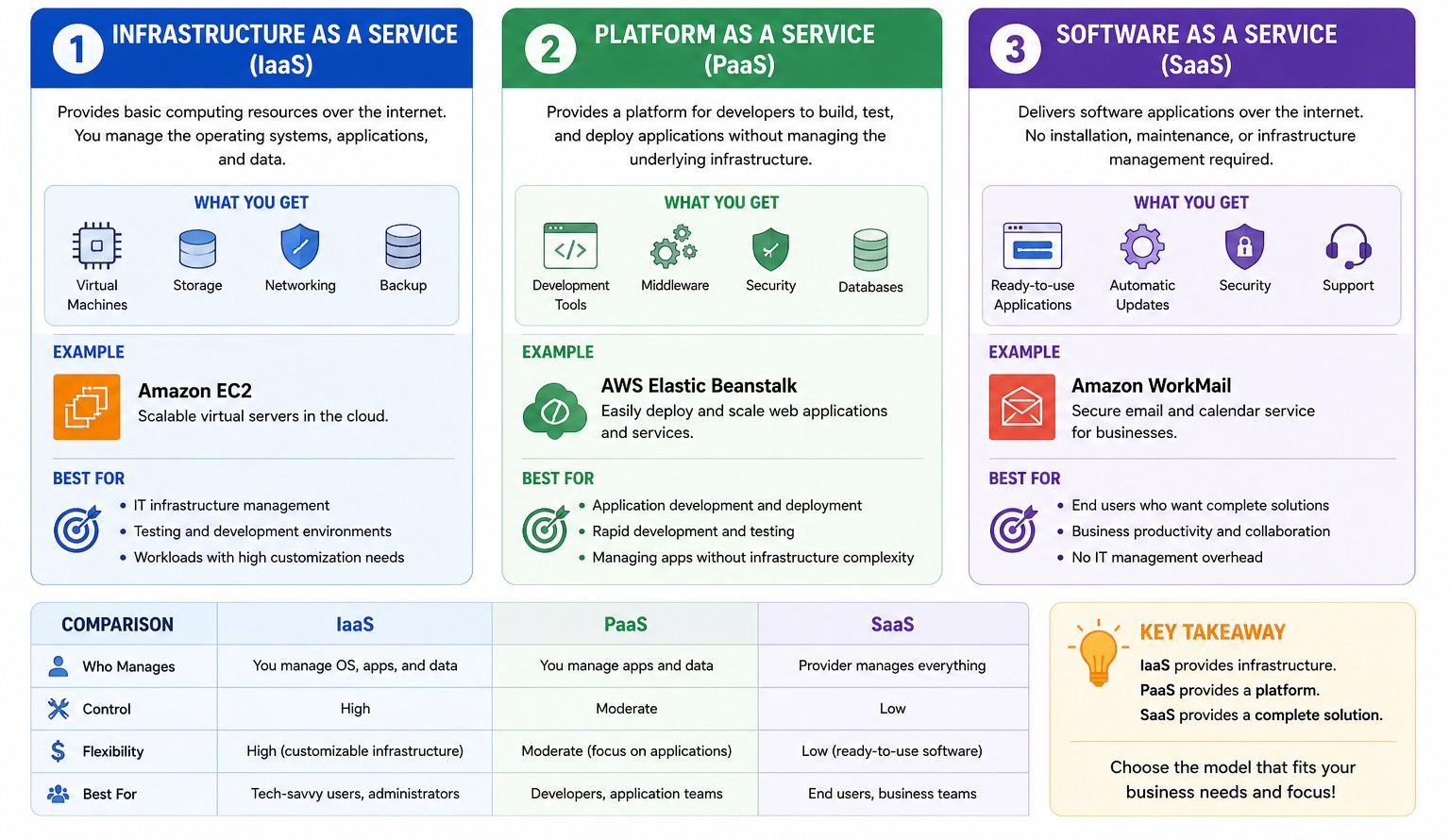
9.AWS Cloud Service Models:
10.Real-World Applications of AWS:
AWS is used across industries for various purposes, including:
- Hosting websites and web applications
- Developing mobile and enterprise applications
- Running big data analytics
- Implementing artificial intelligence solutions
- Supporting DevOps and automation workflows
11. Conclusion:
AWS cloud computing has become a cornerstone of modern technology, enabling organizations to operate efficiently, innovate rapidly, and scale globally. Its wide range of services, flexible pricing model, and robust infrastructure make it an ideal choice for businesses and individuals alike.
As the demand for cloud professionals continues to rise, gaining expertise in AWS can open doors to numerous career opportunities. Whether you are a beginner or an experienced professional, learning AWS is a strategic step toward building a successful career in cloud computing.





 Whatsapp us
 Call us
 Enquire Now